



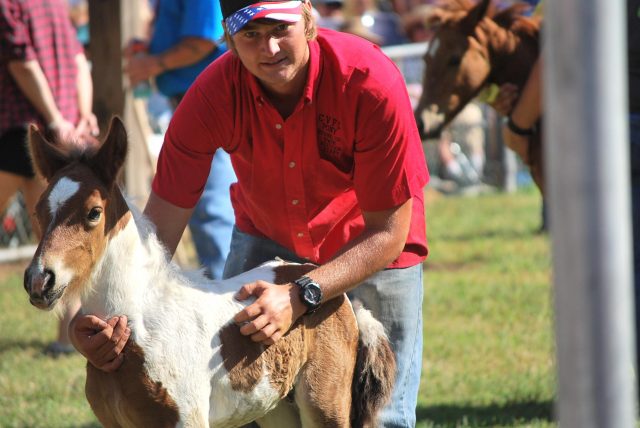
Witnessing History: The Record-Breaking Chincoteague Pony Auction
Of all the events that we had the chance to participate in this weekend, the pony auction is the one for which I wished we had arrived earlier. The fairgrounds were packed.
The auction began at 8:00 AM, but by the time we arrived around 7:15 AM, finding a spot with a good view of the auction pen was already impossible. The horses in the holding area nibbled on hay, vied for their preferred locations, or groomed one another.
@go_riding Teamwork makes the dream work … #GroomingGoals #ChincoteaguePonies #PonySwim100 #GoRiding2025 #HorseNation ♬ Wild Horses – JD Brower Band
Folding chairs dotted the fairgrounds and the crowd buzzed with excitement. This wasn’t just any Chincoteague Pony Auction—it was the 100th anniversary, and it would go down in history as the highest-grossing sale the island had ever seen.
If you’ve never been to the Chincoteague Pony Auction, let me paint the picture: it’s equal parts small-town tradition, high-stakes auction, and heartwarming chaos. This was my first time at the auction, so I am not sure if this is how it usually feels or if it was due to the significance of the centennial, but the crowd was huge.
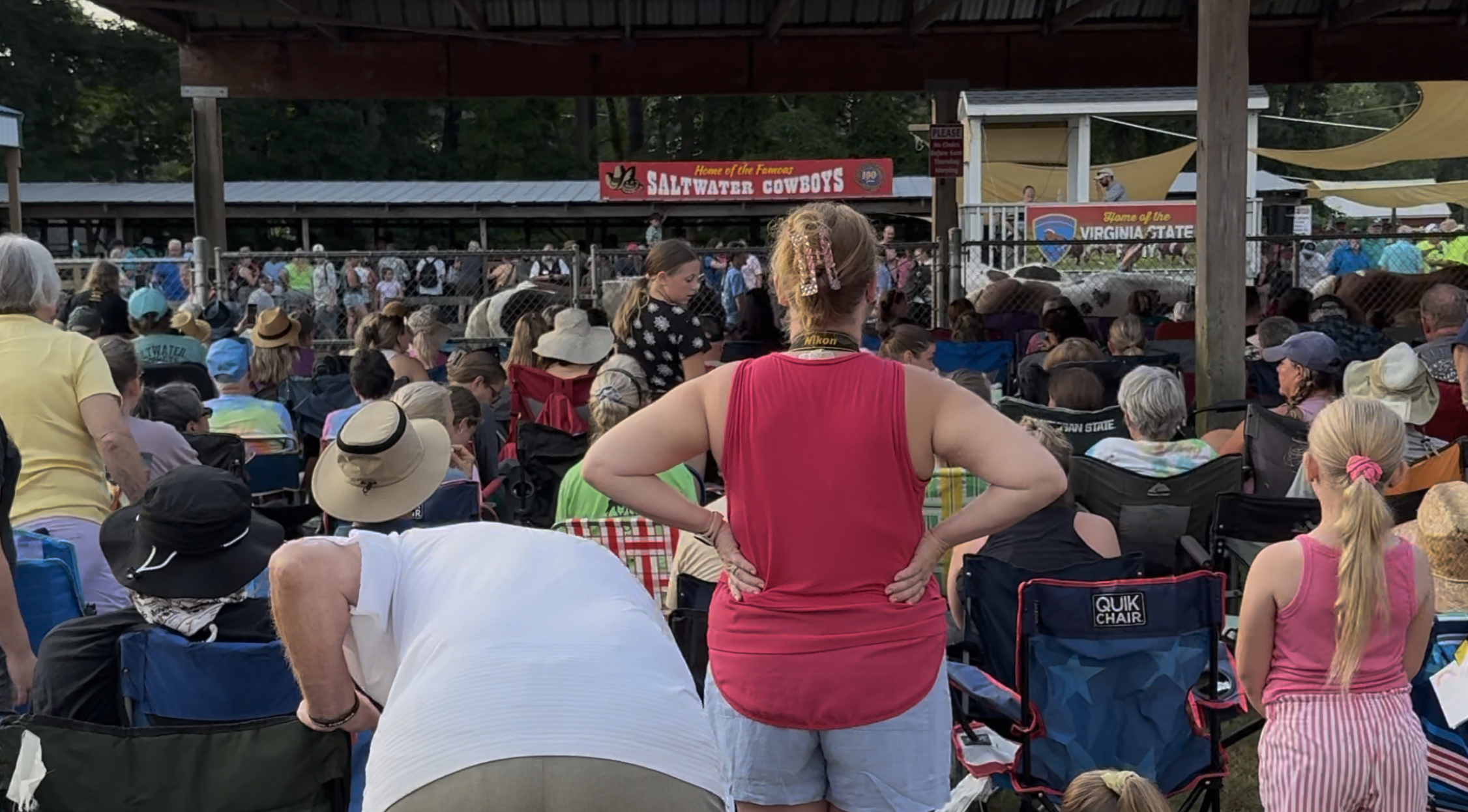
Photo by DeAnn Long Sloan
The Saltwater Cowboys, after rounding up the wild ponies from neighboring Assateague Island, guide the herd through the famous swim and into corrals at the Chincoteague Carnival Grounds. There, under tents and surrounded by spectators from across the country, the ponies are auctioned off one by one — some to forever homes, others to be returned to the wild after a symbolic “buyback.”
A buyback pony is a foal that’s purchased at auction with the intention of returning it to the wild herd. The buyer pays for the pony, earns naming rights, but donates it back to the Chincoteague Volunteer Fire Company, allowing the foal to live out its life on Assateague Island and help sustain the herd’s population and genetics.
The auction began a little before 8:00 AM. The first items auctioned off were donated items such as custom-made leather saddle bags, a fleece blanket, a one-of-a-kind hat and jacket, and various prints. From the get-go it was clear that people were here to bid. Each item brought in a fair amount of money, with the saddle bags going for $2300. That’s when I got an inkling that this was no longer an auction of $400 ponies (I had one friend tell me she was able to get them for $40 when she was a kid).
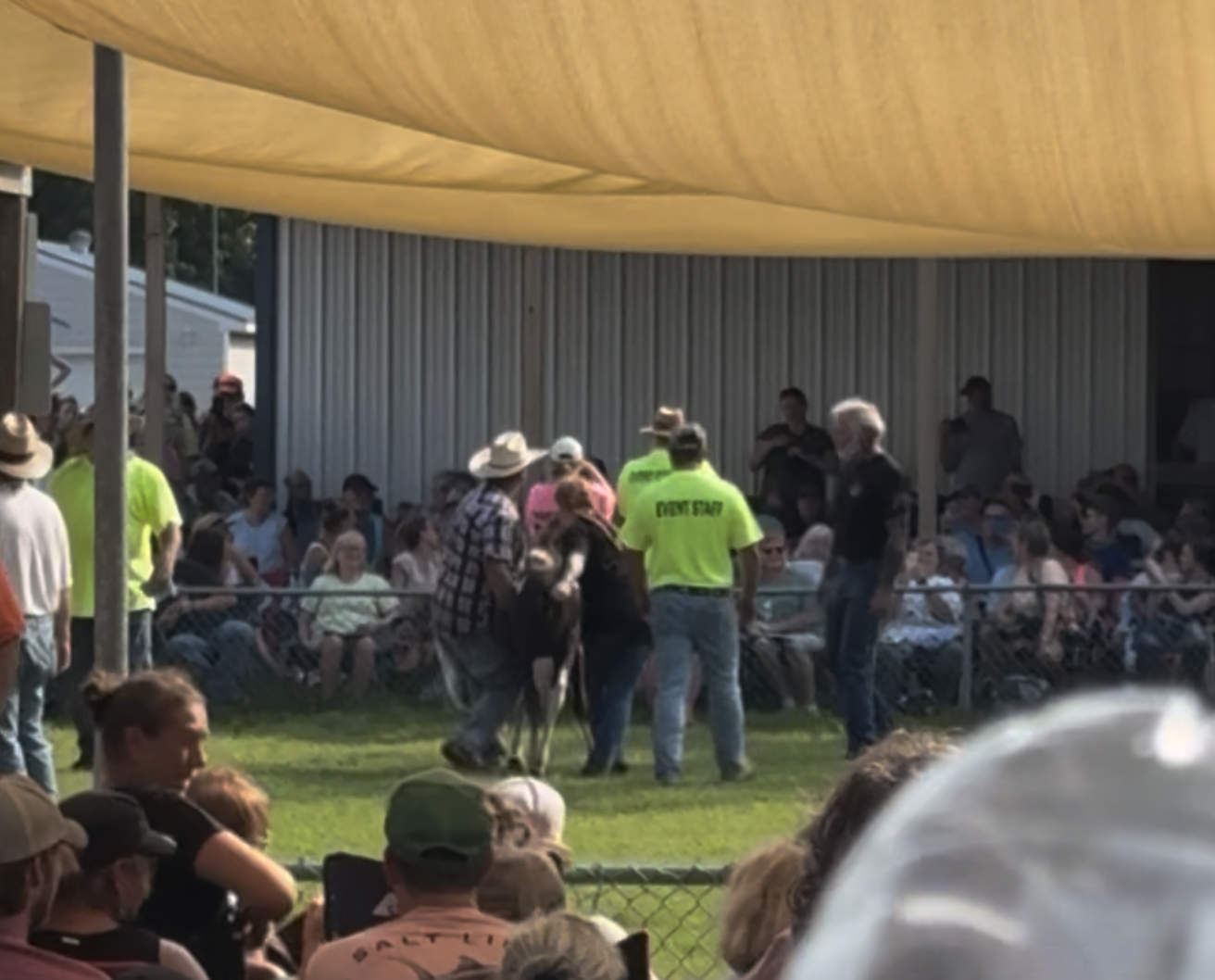
A somewhat blurry look at how the ponies were presented. Photo by DeAnn Long Sloan.
Then the first pony came out — it was actually lot #2, as #1 would be auctioned in the place of foals that had not made it to the auction due to passing away or being held for other reasons. As the auctioneer’s chant began—”Do I hear a thousand? Now fifteen hundred, two thousand!”—the energy surged. Bidders waved numbered paddles while spectators cheered like they were courtside at a championship game. It was loud, sweaty, joyful pandemonium. The first pony, a chestnut filly by Ken and out of Kimmie Sue, went for $3400. The crowd cheered.
This was no joke. Fun though it may have been, this was a record-breaking auction. The first buyback filly sold for $31,500. Then a take-home buckskin pinto filly went for $17,500. Another buyback went for $46,000. Then a take-home earned $21,500. This was a black filly, by the hugely popular stallion Riptide and out of Summer.
People around me gasped, clapped, and laughed in disbelief. They were thrilled that the ponies were raising this much money and thrilled to take part in the excitement.
Then records began being broken. A buyback filly by Beach Boy and out of Flower went for $78,000. The previous record was $50,500. The ceiling had been shattered.
And then it was shattered again. Lot 56, a bay pinto filly by Hidalgo and out of Marguerite, went for an astounding $100,000!!
“100 years, 100 foals, $100,000.” It was incredible to watch.
Beyond the big numbers and bidding wars, though, the auction remains rooted in what has always made it special: community, conservation, and connection. The proceeds go directly to the Chincoteague Volunteer Fire Company, which manages the wild herd and helps maintain its health and sustainability. That means every dollar spent on a foal also helps preserve the tradition that makes this little island famous.
For first-timers (and I was one), the experience can feel overwhelming in the best way. Kids leaned over fences, trying to pick their favorite pony. Onlookers told stories about the auctions they had seen in the past or shared what made them attend this year’s Pony Swim and auction. We made fast friends, bound by the kinship of loving the horses.
We would all cheer when a particularly spicy foal came into the pen.
The 2025 Chincoteague Pony Auction raised a record-breaking $1,008,100. This includes the money from the sale of 94 ponies, with six of those being buybacks. The average cost of a pony was $10,724, and the highest bid for a take-home pony was $50,000. This is an astounding total that broke every previous record and solidified the 100th Chincoteague Pony Auction as a milestone in the island’s history.
There also was a feeling in the air that stuck with me: pride, nostalgia, and deep affection for these wild, saltwater-born ponies that continue to capture hearts generation after generation.
And if this year’s auction proved anything, it’s that even after 100 years, the magic of Chincoteague is far from fading. In fact, it might just be getting stronger.
