



Training in the Right Way: Unpopular Opinion — You Shouldn’t Ride Horses You’re Sacred Of
When a capable rider is actually afraid while riding a horse, it is usually because the horse is not improving with the capable rider’s skills and techniques, and/or is increasingly unpredictable. The rider needs to listen to that fear and give themselves permission not to ride the horse.
Dressage training is supposed to be the process of training ANY horse to be a better riding horse. The more the horse learns, in theory, the easier it is to communicate with and therefore complete more complex tasks with. Although competition dressage training often is more focused on training for the dressage test, that is not what the original intention (and original judging requirements) were for competitive dressage. Initially, it was designed to give riders and trainers a way to determine how their training measured up to the theoretical ideal of the training process. That said, it is critically important to understand the meanings and reasons for some of the terms we use to describe dressage training and what to look for when observing training and competition (and videos and photos), regardless of whether you intend to compete or just train your horse to be a better whatever you do with him. That, ultimately, is the main purpose of my articles. To provide education and knowledge for riders to understand and improve their eye and understanding of what dressage training is supposed to be. While there will always be some differences in practice and theory, good horse training is always recognizable to the educated eye. That said, it absolutely is necessary that we remember and understand that limited knowledge is limited judgment.
* * *
Fear is a natural response to perceived danger, and it is normal and appropriate to feel fear in situations that present us with potential bodily harm (you know, like climbing on a feral 1200lb flight animal without the appropriate skills and training). This is a survival mechanism that inspires us to avoid situations that will cause us harm.
When riding and training horses, people are presented with situations that can inspire fear in the beginner phase of learning to ride as well as in the expert phase. Additionally, different people have different thresholds for fear in general, and your experience as a rider and trainer will modify that threshold.
Inexperience and bad experiences increase the tendency for fear in riding while having successful techniques and experience with managing actions and activities that can be frightening develops a sense of confidence and bravery in a rider. If a rider is fearful about cantering, or riding outside the ring, or getting on a larger horse, these are reasonable concerns that can be overcome with positive experiences, learning successful techniques, and practice. However, if the rider is experienced, knowledgeable, and practiced, and they are afraid of riding a certain horse, that is an entirely different scenario, and that is what we are discussing in this article.
While there are different types of fearful riders, I want to focus on the riders who are capable, but have a horse that scares them, and they have convinced themselves that
1) they HAVE to ride it and
2) their fear is unnecessary or inappropriate because “other” riders would “ride through it.”
These individuals recognize intuitively that they should be fearful — for whatever reason — but have hazed themselves into believing they’re being silly or a ‘weenie’ for it and try to soldier on anyway.
That’s neither a good idea nor an effective training plan.
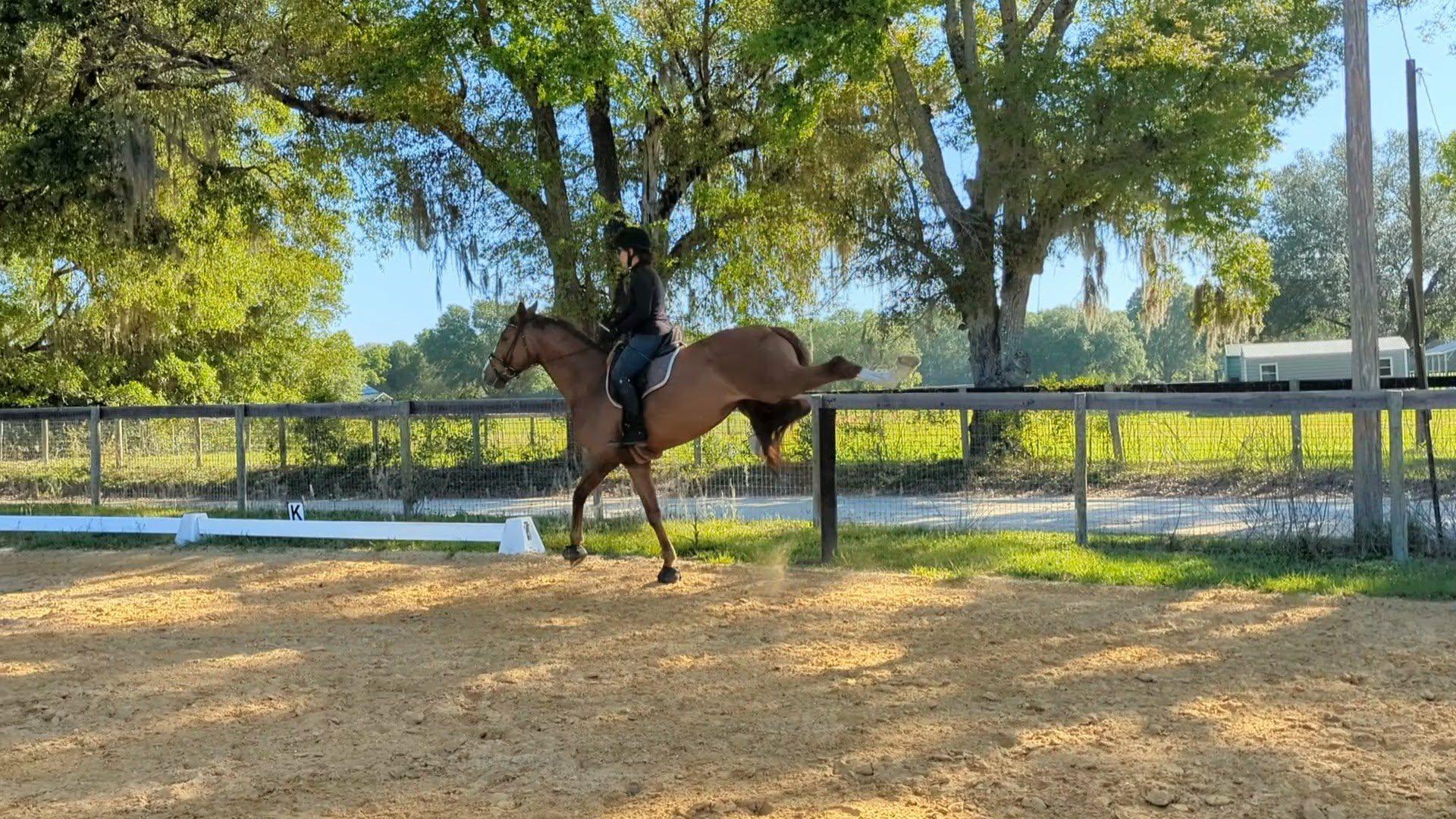
Having a predictable, reliable system gives the rider the tools to train horses that are being difficult. Photo (c) Morgane Schmidt.
First, let’s talk about the difference between fear and apprehension (in riding, anyway). It is normal for a very excellent young horse trainer (for example) to experience apprehension about getting on some young horses. This is a healthy respect for what this horse may be capable of doing, but does not rise to the level of fear because of the recognition that there is a system that is training the horse to be a better riding horse, as evidenced by the concerning behavior diminishing or being avoided altogether.
Fear stems from not having a predictable and reliable system that is working to diminish or completely avoid the behavior. In other words, when the “normal” training techniques and skills of riding are improving the difficult acting / dangerous horse, the rider may be apprehensive but is regularly getting through the problem (is in control).
When the normal techniques and skills are not solving the problem, it is appropriate for the rider to be afraid of riding the horse because they have no control of the process. I regularly tell competent, capable riders that if they are afraid of a horse, they should not ride it. This is because they are capable enough to solve the problem and it remains unsolved. They are afraid for a very good reason, they are not able to control the training process (and these are 1200lb flight animals we’re climbing on).
Additionally, fearful riders do not react in ways that train horses because they are riding (using their aids) based on their emotions not based on what the horse needs to learn a better way. Most (arguably all) horses that behave dangerously under saddle cannot be made better by just riding them more.
Read that last sentence again.
If a horse regularly behaves in a scary way under saddle, it is always for a reason. The reason can be physical pain or discomfort. It can be fear or anger. And it can be complete lack of understanding. Regardless, repetition and fear-based forceful riding never solve the problem. Instead, it just repeats the cycle.
Unsurprisingly, people don’t like to be told that they shouldn’t ride the horse. It legitimizes that the problem is real and is serious. Also, they often feel like they have failed for being “too afraid” to fix it the problem, and that they “should have been better.” But knowing when to not ride a horse is an expert-level skill. Having other ways to help horses become good citizens and competent riding horses are also expert-level skills. Not every good rider is a problem-horse trainer. Not every good problem-horse trainer is up to the super dangerous horse techniques. All of which is to say that an excellent trainer will feel fear sometimes, and they need listen to it.
If you are a capable rider, and the horse you are on is not improving with good technique and good skills, and the behavior repeats and causes more than some apprehension, you are “good” enough to know that you should listen to that feeling, stop trying to ride the horse, and find another route.
Also, while considering your other options and before you continue trying to train a horse that has exhibited dangerous behaviors, you must investigate what physical pain or discomfort might be causing it. There is no way to train away a reaction to pain.
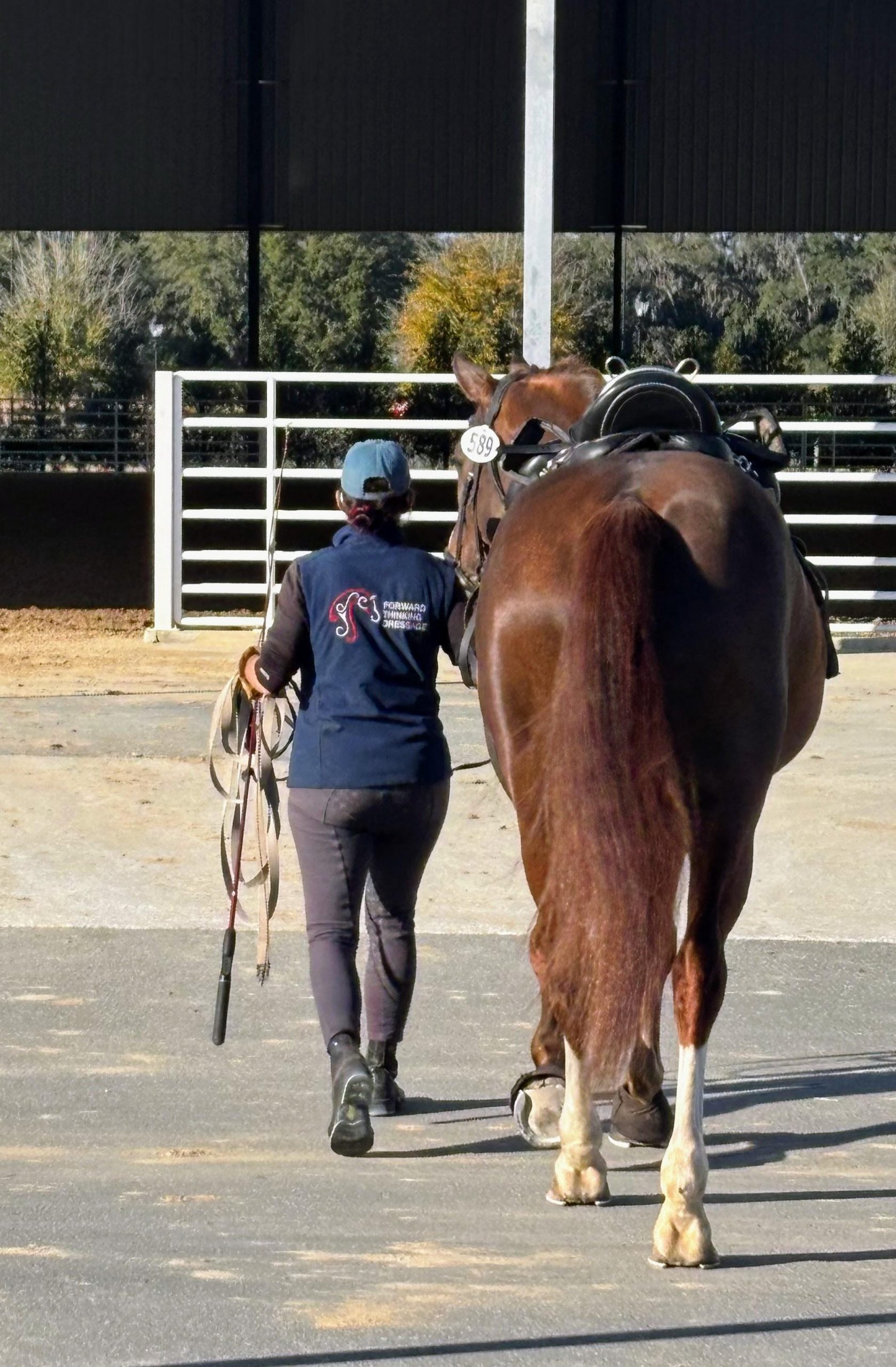
Longeing is one of the ground-work methods that can train horses to be better riding horses. Photo (c) Gwyneth McPherson.
Different people have different alternative-to-riding training skills. Working horses on the ground can include in-hand training, longeing, double-longeing, long-lining, liberty, and round pen work. When done well, the method gives the horse the education (suppling and strengthening) and understanding/confidence he needs to be ridden again. Each of these techniques have different routes to that goal. They have to be used by an expert and with consistency to solve the problem. Because of that, these techniques are often dismissed as many people are not competent enough in them to really make the horse better. And therefore, they are often not respected as training methods that are equal to riding. This is unfortunate as they are often necessary and can be the key to solving a great many training issues. That said, if you do not have the education or teacher for these skills, find a trainer that does to help guide you.
Apprehension about riding a difficult horse that is getting better with a capable rider’s skills and techniques is normal, and usually transient. When a capable rider is actually afraid while riding a horse, it is usually because the horse is not improving with the capable rider’s skills and techniques, and/or is increasingly unpredictable. The rider needs to listen to that fear and give themselves permission to not ride the horse.
They, in fact, need to respect that their fear is a sign of capability and knowledge that is part of their expertise. The next part of this expertise is to recognize that there may be a physical problem that needs to be addressed first, and then from there a training plan can be made – likely one involving one of the in-hand training methods that will get the horse through the problem. Following all of that, if your level of expertise on the ground is not successful, be able to recognize that either the horse needs a different method or a more experienced with difficult-horses trainer. And realistically, even though it’s a hard pill to swallow, understand that there are ultimately some horses who simply do not need to be ridden (for a whole host of reasons). That is also a fact that should be respected.
Remember: Limited knowledge is limited judgment.

Gwyneth and Flair in competition at Grand Prix. (c) flatlandsfoto.
Gwyneth McPherson has over 35 years experience competing, training, and teaching dressage. She began her education in in the late 1970s, riding in her backyard on an 11 hh pony. Her first instructor introduced her to Lendon Gray (1980 and 1988 Olympian). who mentored Gwyneth for a decade during which she achieved her first National Championship in 1984, and her Team and Individual Young Rider Gold Medals in1987.
In 1990 Gwyneth began training with Carol Lavell (1992 Olympian) who further developed Gwyneth as an FEI rider and competitor. Gwyneth achieved a Team Bronze in 1991 and a Team Silver in 1992 in the North American Young Riders Championships, and trained her stallion G’Dur to do all the Grand Prix movements while riding with Carol.
In 2008, while Head Trainer at Pineland Farms, Gwyneth began training with Michael Poulin (Olympian 1992). Michael was trained by Franz Rochowansky (Chief Rider for the Spanish Riding School 1937-1955). Michael has shared much of Rochowansky’s knowledge and wisdom with Gwyneth, completing her education as a Grand Prix rider, trainer, and competitor.
Gwyneth’s teaching and training business, Forward Thinking Dressage,is based in Williston, FL. In addition to teaching riders and training, Gwyneth also loves sharing her knowledge of the sport and art of dressage as well as discussing relevant topics pertaining to the training itself and the current competitive landscape.

