




Knowing When It’s Time: Letting Our Horses Go
Loving a horse sometimes means making the hardest decision of all: choosing peace over prolonging pain.
Canva/CC
There is no decision in horse ownership that feels heavier than deciding when it’s time to say goodbye.
We prepare for colic. We prepare for lameness. We prepare for aging joints and special diets and blanketing routines. But we are never truly prepared for the moment when we have to look at the horse who carried us through so much of life and ask ourselves: Is keeping you here still the kindest thing?
This isn’t an easy conversation. It’s not supposed to be. But it’s one every responsible horse owner must be willing to have.
Horses Don’t Understand Tomorrow
Canva/CC
One of the most important, and often overlooked, truths is this: horses don’t anticipate the future.
They don’t think, If I just make it through this winter, spring grass will feel good again.
They don’t tell themselves, Maybe next month I’ll be more comfortable.
Horses live entirely in the present moment.
If they are in pain, they are in pain now. If they are struggling to stand, to move, to eat, to interact, that is their whole world in that moment. They are not clinging to hope for a better tomorrow the way we do.
That’s a very human lens.
And sometimes, we project that lens onto them.
Quality of Life (For the Horse)
Canva/CC
When considering euthanasia, the central question must always be: What is this horse’s quality of life?
Not:
- How much do I love them?
- How long have we been together?
- How hard will this be for me?
But:
- Are they comfortable?
- Can they move without significant pain?
- Are they eating willingly?
- Do they still engage with their environment?
- Are good days clearly outweighing bad days?
Chronic discomfort changes a horse. Pain dulls their expression. It steals appetite. It steals interaction. It steals the spark.
And while we can manage many conditions beautifully today — arthritis, Cushing’s, metabolic disorders, old injuries — there is a line where management becomes maintenance of suffering rather than preservation of life.
That line isn’t always dramatic. Sometimes it’s quiet. A little more stiffness. A little less interest. More time lying down. More difficulty getting up.
It’s our job to notice.
The Hard Truth About Finances

Canva/CC
This part is uncomfortable, but it needs to be said plainly.
Finances matter.
Advanced imaging, specialty shoeing, compounded medications, repeated hospital stays — these things cost money. And not everyone has unlimited resources. That doesn’t make someone a bad owner.
But it does become unfair to keep a horse alive if we cannot afford the care required to keep them comfortable.
Keeping a horse alive without adequate pain management, proper nutrition, or appropriate veterinary support isn’t noble. It’s prolonging suffering.
We owe them honesty. And sometimes that honesty includes acknowledging our limits.
There is no shame in recognizing that you cannot financially sustain heroic measures. The responsibility lies in ensuring that if you cannot provide the next level of care, you do not allow the horse to deteriorate because of it.
That’s not cruelty. That’s accountability. And we also have to ask ourselves…
Are We Doing This for Them or for Ourselves?
Canva/CC
This is the question that cuts the deepest.
Sometimes, we are keeping them here for us.
Because we aren’t ready.
Because we don’t want to feel the grief.
Because the barn will feel emptier.
Because the routine will change.
Because letting go feels like betrayal.
But horses do not measure love by longevity. They measure it in comfort and security.
If a horse is living in increasing pain, confusion, or distress, and we delay the decision because we are not ready to grieve, then the suffering belongs to them — not us.
And that’s not fair.
There is a well-known saying in the vet med world:
“Better a week too early than a day too late.”
This carries profound compassion.
A day too late can mean panic. Uncontrolled pain. A fall they can’t recover from. A catastrophic event that strips away the quiet dignity we could have preserved.
A week or even a month too early often means they leave this world on a good day — after a carrot, a soft brush, a final scratch in their favorite spot. It means they never experience the worst version of what their body might become.
That is a gift.
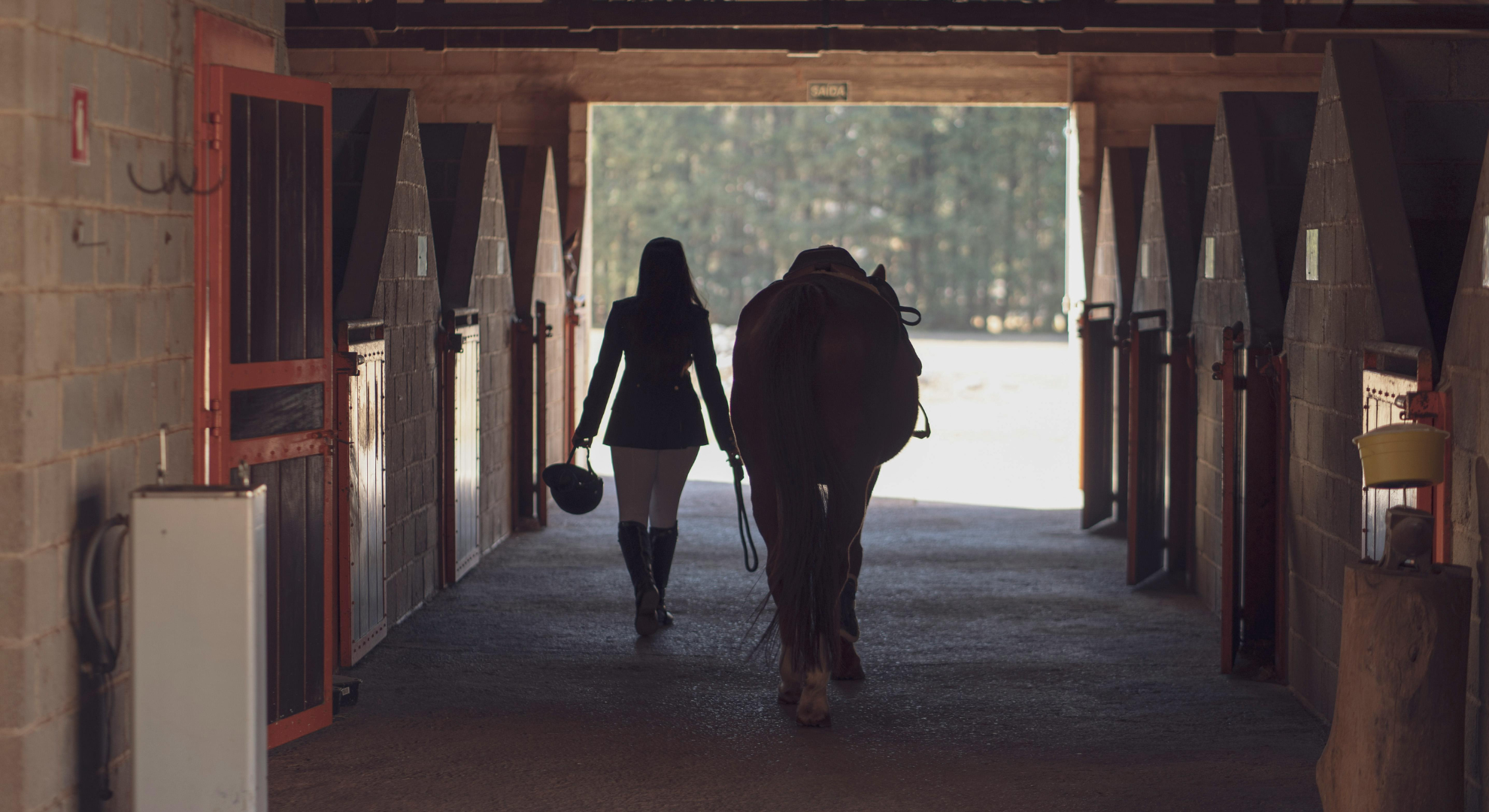
The Last Act of Stewardship
Canva/CC
We don’t get horses to avoid heartbreak. In fact, loving them guarantees it eventually.
But our responsibility isn’t just to ride them, feed them, or manage their vet care. It’s to steward their entire life, including its end.
Choosing euthanasia when quality of life is gone is not giving up. It is stepping up.
It is saying:
- I will not let you suffer because I am afraid.
- I will not let your final chapter be pain-filled.
- I will carry this grief so you don’t have to carry discomfort.
That is not weakness. That is love with a backbone.
If you’re facing this decision now, know this: the fact that you are wrestling with it means you care deeply. Seek guidance from your veterinarian. Ask honest questions. Evaluate quality of life without sentiment clouding the view.
And when the time comes, let them go with the same kindness you showed them every other day of their life.
Sometimes the bravest thing we can do for a horse is to give them peace.
*If it is time for you to let your horse go, you can learn more about what to expect here.

Canva/CC
