



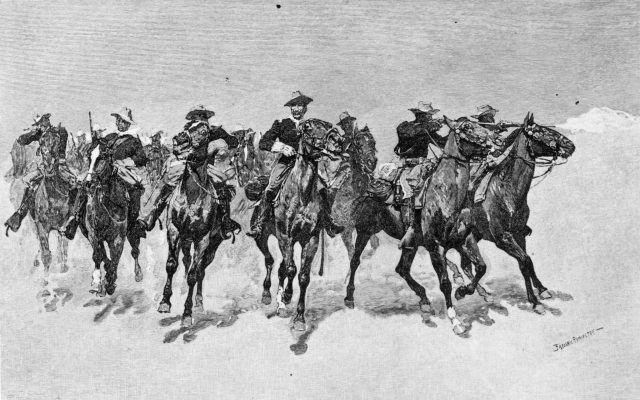
The Buffalo Soldiers and the American Horse
In honor of Black History Month, we look at the 9th and 10th Cavalry Regiments — the Buffalo Soldiers whose discipline, horsemanship, and service helped shape American military history and the legacy of the American horse.
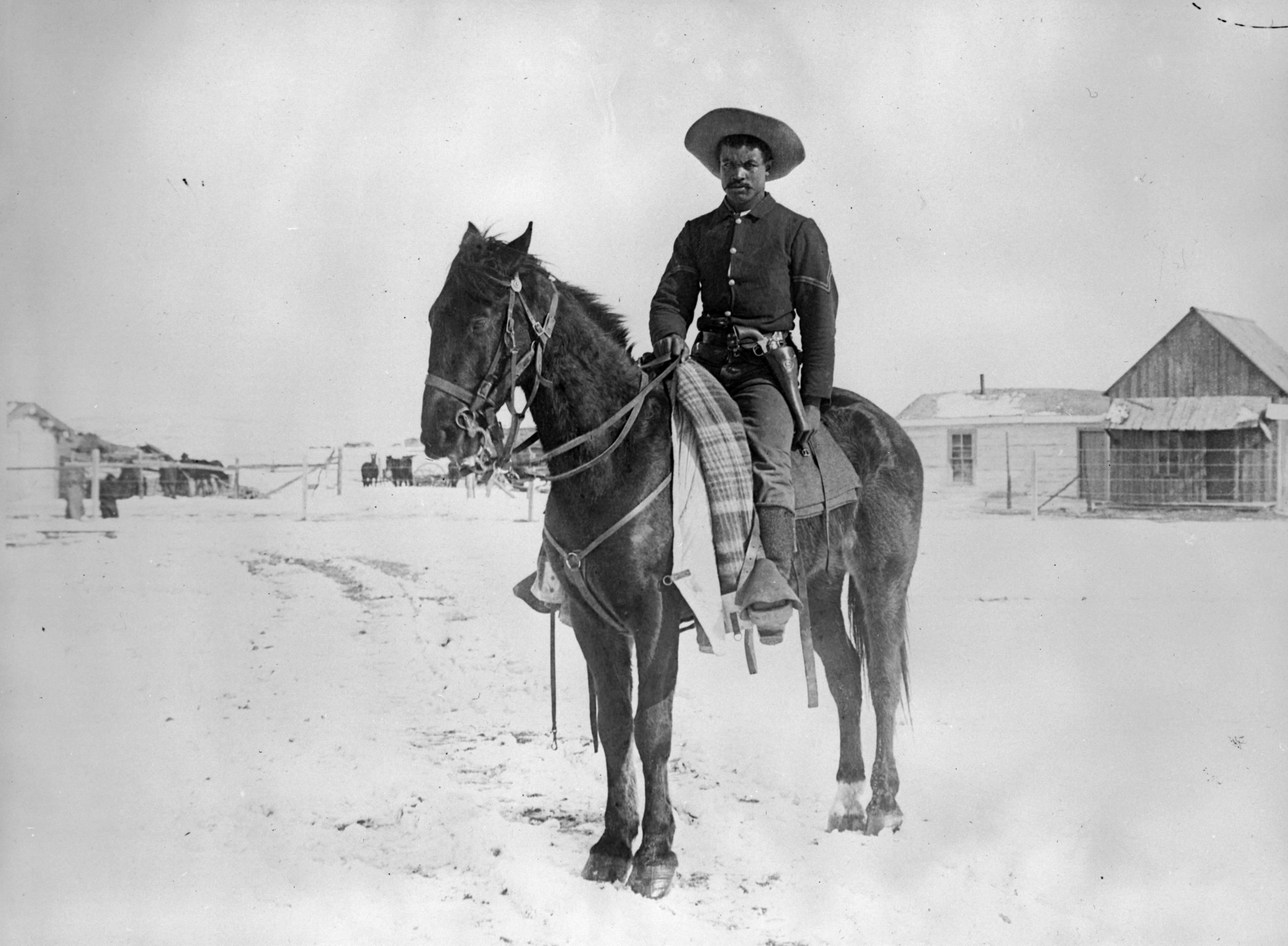
A Corporal in the 9th Cavalry. Snow covers the ground 1890. See page for author, Public domain, via Wikimedia Commons.
When we talk about the American horse, we usually drift toward ranches, racetracks, and rodeo arenas.
But some of the most disciplined, demanding, and historically significant horsemanship in American history happened under military command, and it was carried out in large part by Black cavalrymen known as the Buffalo Soldiers.
In honor of Black History Month, it’s worth slowing down and remembering that the story of the American horse is also a military story. And the Buffalo Soldiers — particularly the 9th Cavalry Regiment and the 10th Cavalry Regiment — were central to it.
Who Were the Buffalo Soldiers?
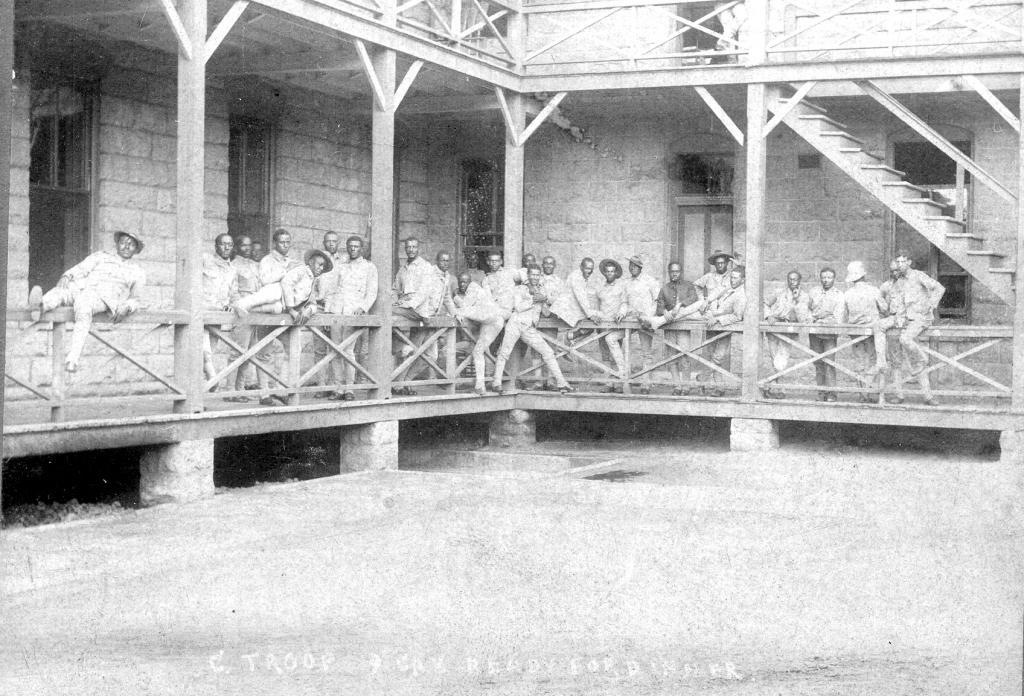
Buffalo soldiers pose outside of their barracks located around the Cavalry Parade Field. US Army, Public domain, via Wikimedia Commons.
After the Civil War, Congress passed legislation in 1866 allowing the formation of six all-Black regiments in the peacetime U.S. Army. Among them were two cavalry units: the 9th and 10th Cavalry.
These regiments were composed primarily of formerly enslaved men, free Black men, and Civil War veterans. They were led initially by white officers, as was policy at the time. The nickname “Buffalo Soldiers” is widely believed to have been given by Native American tribes, possibly in reference to the soldiers’ curly hair or their fierce fighting ability — though the exact origin remains debated among historians.
What is not debated is this: these men were elite horse soldiers operating in some of the harshest terrain in the country.
And none of that happened without extraordinary horsemanship.
Cavalry Horsemanship Was Not Casual Riding
Embed from Getty Images
Modern riders sometimes romanticize cavalry life — polished boots, dramatic charges, a bugle in the distance. The reality was far more grueling.
Cavalry training required:
- Mounting and dismounting at speed
- Shooting accurately from horseback
- Riding long distances in extreme heat and cold
- Managing remounts and pack animals
- Maintaining tack and equipment under field conditions
- Caring for horses with limited veterinary support
A cavalryman’s effectiveness depended on his ability to stay mounted, stay balanced, and stay in control — often while under fire.
Unlike ranch riding or competition, cavalry work wasn’t about style points. It was about survival, discipline, and coordination. Units had to move as one body — horse and rider functioning almost as extensions of a larger system.
If your horse failed, you failed. And if you failed, the consequences weren’t ribbons or time penalties.
They were life or death.
The 9th and 10th Cavalry in the American West
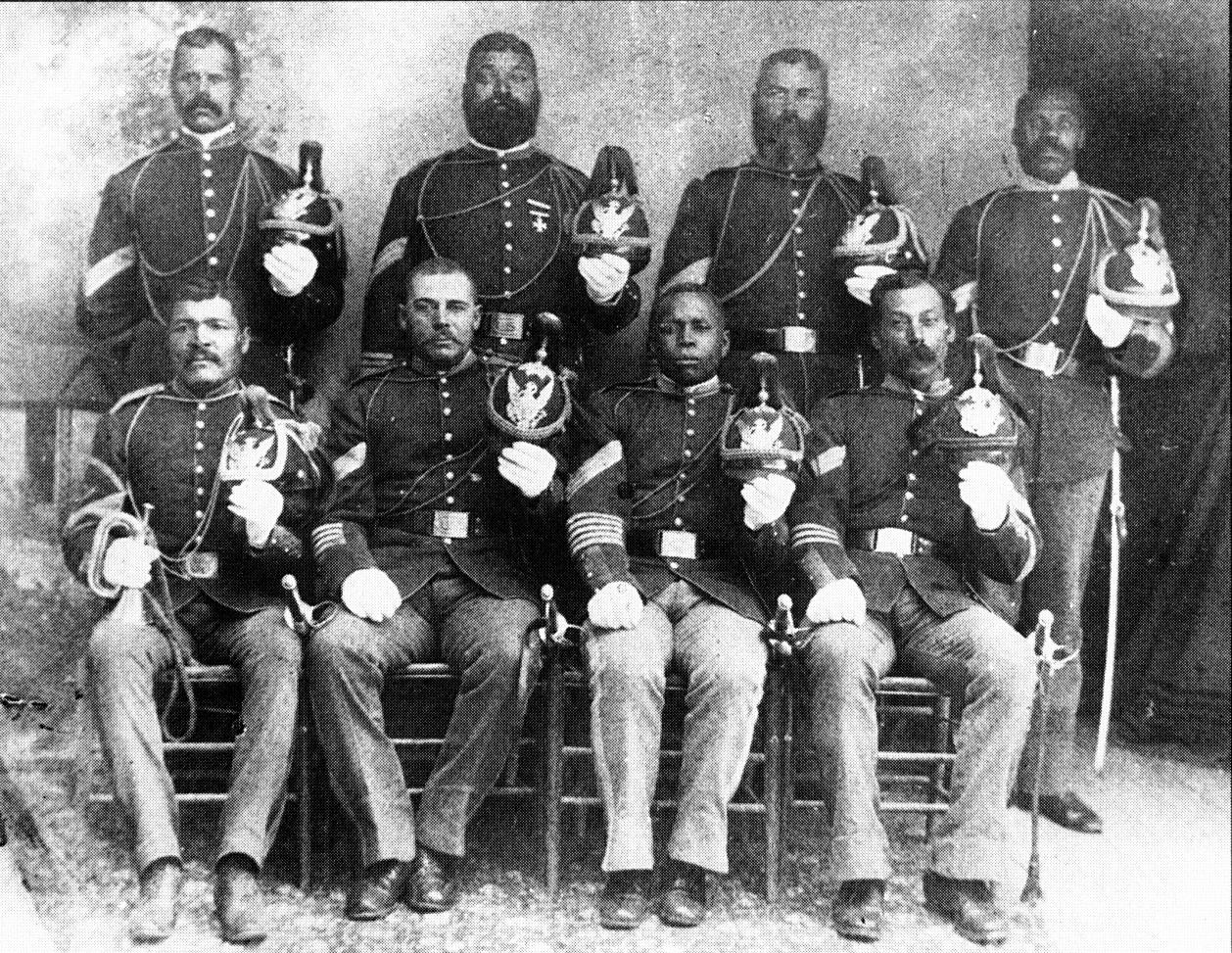
Photograph taken at Fort Robinson, Nebraska, of non-commissioned officers from the United States Army’s 9th Cavalry Regiment. United States Army, Public domain, via Wikimedia Commons
The 9th and 10th Cavalry regiments were stationed primarily in the American West: Texas, New Mexico, Arizona, and the Great Plains. However, during the Spanish-American War, they spent much of their time in Florida as well. Their duties included:
- Protecting settlers and railroad crews
- Escorting mail routes
- Patrolling frontier territories
- Participating in campaigns against Native American tribes
- Policing remote outposts
The terrain they covered was vast and unforgiving. These soldiers and their horses traveled thousands of miles across deserts, mountains, and plains.
Think about the horse management alone.
Remount systems had to be organized. Feed and water had to be secured in arid environments. Hoof care had to be managed without the luxury of modern farriers on speed dial. Saddles and bridles had to withstand constant use in extreme conditions.
Military horsemanship demanded durability, from both horse and rider.
The American Horse as Military Infrastructure
It’s easy to think of horses in military history as transportation.
They were far more than that.
Before mechanization, the horse was military infrastructure.
Horses enabled:
- Communication
- Reconnaissance
- Rapid troop movement
- Supply transport
- Tactical advantage
Without cavalry mobility, frontier expansion and military control of western territories would have unfolded very differently.
The Buffalo Soldiers weren’t symbolic participants. They were active operators in shaping how the U.S. Army projected power across the West.
And they did it in a country that denied them full citizenship rights.
Discipline, Care, and Skill
What makes the story especially compelling for horse people is this: cavalry soldiers were expected to maintain an extraordinary standard of horse care.
Army regulations detailed feeding schedules, grooming protocols, tack maintenance, and inspection routines. A cavalryman’s horse was inspected as carefully as his rifle.
That culture of discipline shaped American horsemanship standards. Military riding manuals influenced civilian training philosophies. The expectation that a horse be responsive, conditioned, and obedient under pressure carried over into ranching, law enforcement, and even early competitive disciplines.
The horse world did not evolve in a vacuum.
It absorbed military standards.
And Black cavalrymen helped establish them.
Recognition That Came Slowly
Despite their service, Buffalo Soldiers faced discrimination, limited advancement opportunities, and systemic racism within and outside the Army.
Their contributions were often minimized in textbooks and media portrayals of the West. Much like Black cowboys, they were present in history but frequently absent from the popular narrative.
Yet their legacy persisted.
The 9th and 10th Cavalry units served in multiple conflicts beyond the frontier period, including the Spanish-American War. Their performance earned respect even when equal recognition lagged behind.
Today, Buffalo Soldier history is preserved in museums, historical sites, and military scholarship — but it still deserves more attention within the broader equestrian world.
Why This Matters to Horse People
If you ride, train, compete, or simply love horses, the Buffalo Soldiers are part of your history, whether or not you realized it.
The American approach to:
- Organized horsemanship
- Mounted discipline
- Tactical riding
- Horse care under pressure
… were all shaped in part by cavalry standards.
And those standards were upheld daily by Black soldiers who rode hard country, maintained demanding regimens, and performed their duties with professionalism despite unequal treatment.
The American horse helped build the nation’s military reach. The Buffalo Soldiers helped define what mounted military excellence looked like.
That story belongs in the broader narrative of American horsemanship, alongside ranchers, racers, and rodeo competitors.
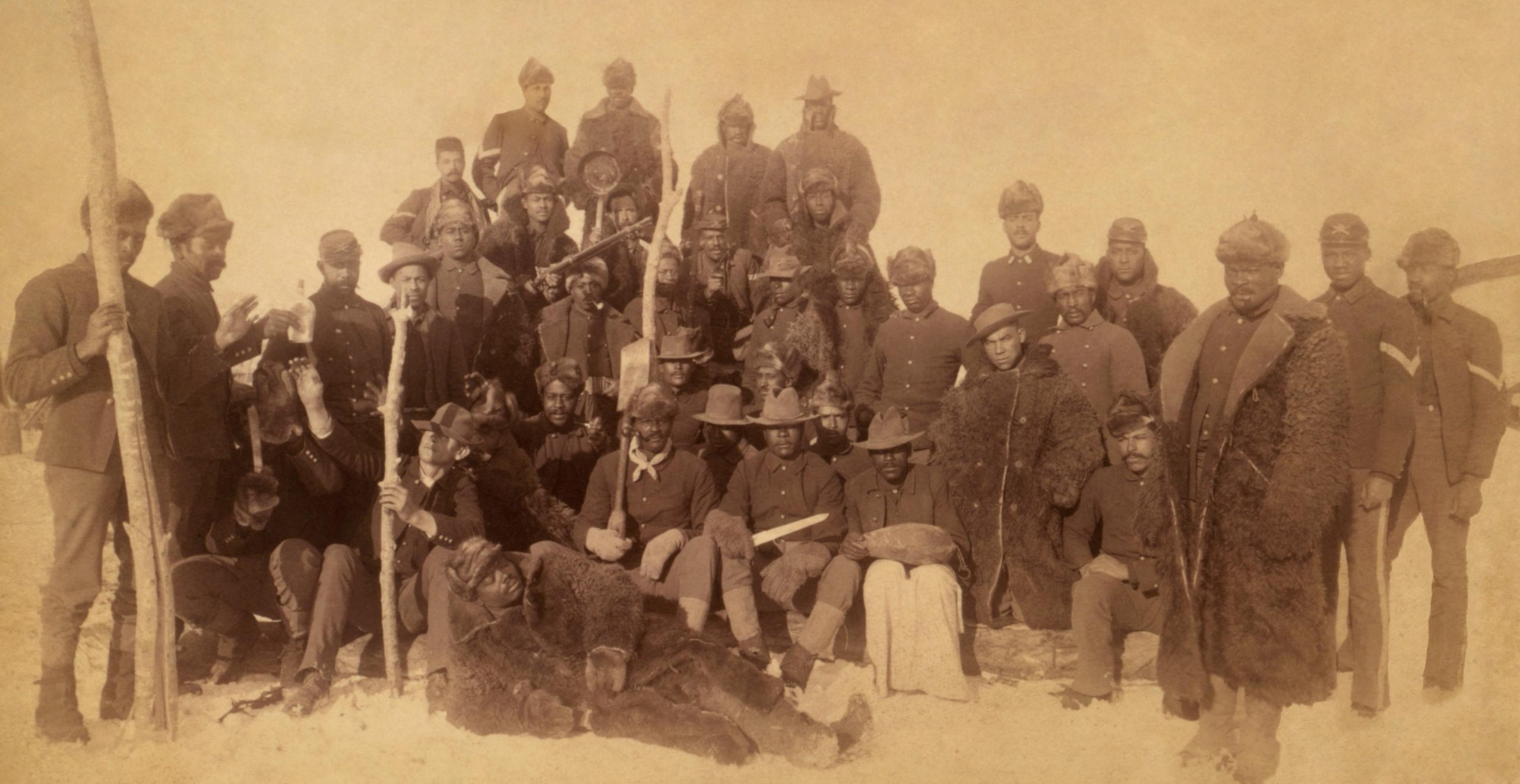
Buffalo soldiers of the 25th Infantry, some wearing buffalo robes, Ft. Keogh, Montana. Photo by Chr. Barthelmess, Public domain, via Wikimedia Commons.
The Bigger Picture
Black History Month isn’t about adding a footnote.
It’s about correcting the narrative.
The story of the American West — and the American horse — is incomplete without the Buffalo Soldiers. Their horsemanship was disciplined, technical, and foundational. Their service shaped military and equestrian standards that echoed long after the cavalry era ended.
The next time you see a historical cavalry photo or read about mounted troops in the West, remember: Behind those reins were riders whose contributions shaped American military history and whose legacy still rides with us today.
