



Training in the Right Way: Set Yourself Up for Success Wintering in Florida
It’s the time of year when riders participate in a mass exodus from the northern states in favor of riding somewhere that *DOESN’T* make their faces hurt (or their horses attempt to yeet them). Here are some of the things you need to think about if you intend to move horses south for training and competing this winter.
Dressage training is supposed to be the process of training ANY horse to be a better riding horse. The more the horse learns, in theory, the easier it is to communicate with and therefore complete more complex tasks with. Although competition dressage training often is more focused on training for the dressage test, that is not what the original intention (and original judging requirements) were for competitive dressage. Initially, it was designed to give riders and trainers a way to determine how their training measured up to the theoretical ideal of the training process. That said, it is critically important to understand the meanings and reasons for some of the terms we use to describe dressage training and what to look for when observing training and competition (and videos and photos), regardless of whether you intend to compete or just train your horse to be a better whatever you do with him. That, ultimately, is the main purpose of my articles. To provide education and knowledge for riders to understand and improve their eye and understanding of what dressage training is supposed to be. While there will always be some differences in practice and theory, good horse training is always recognizable to the educated eye. That said, it absolutely is necessary that we remember and understand that limited knowledge is limited judgment.
* * *
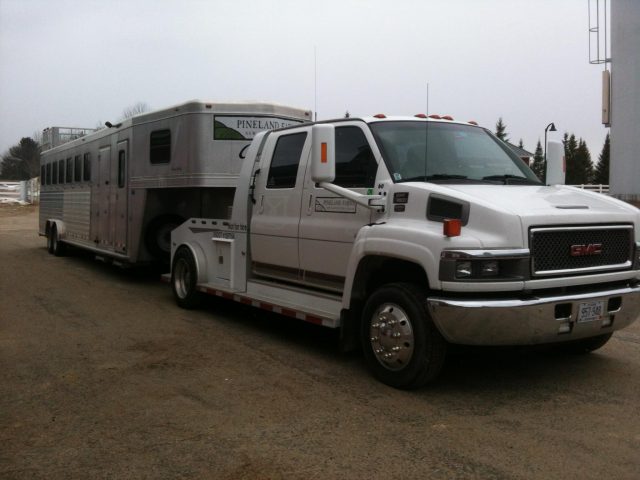
This is the time of year that many riders are making the trek to Florida (or other more southern/warmer/easier to ride in climates). Before I decided to live in Florida full-time, I would make the trip with a load of horses from Southern Maine to North Central Florida every year.
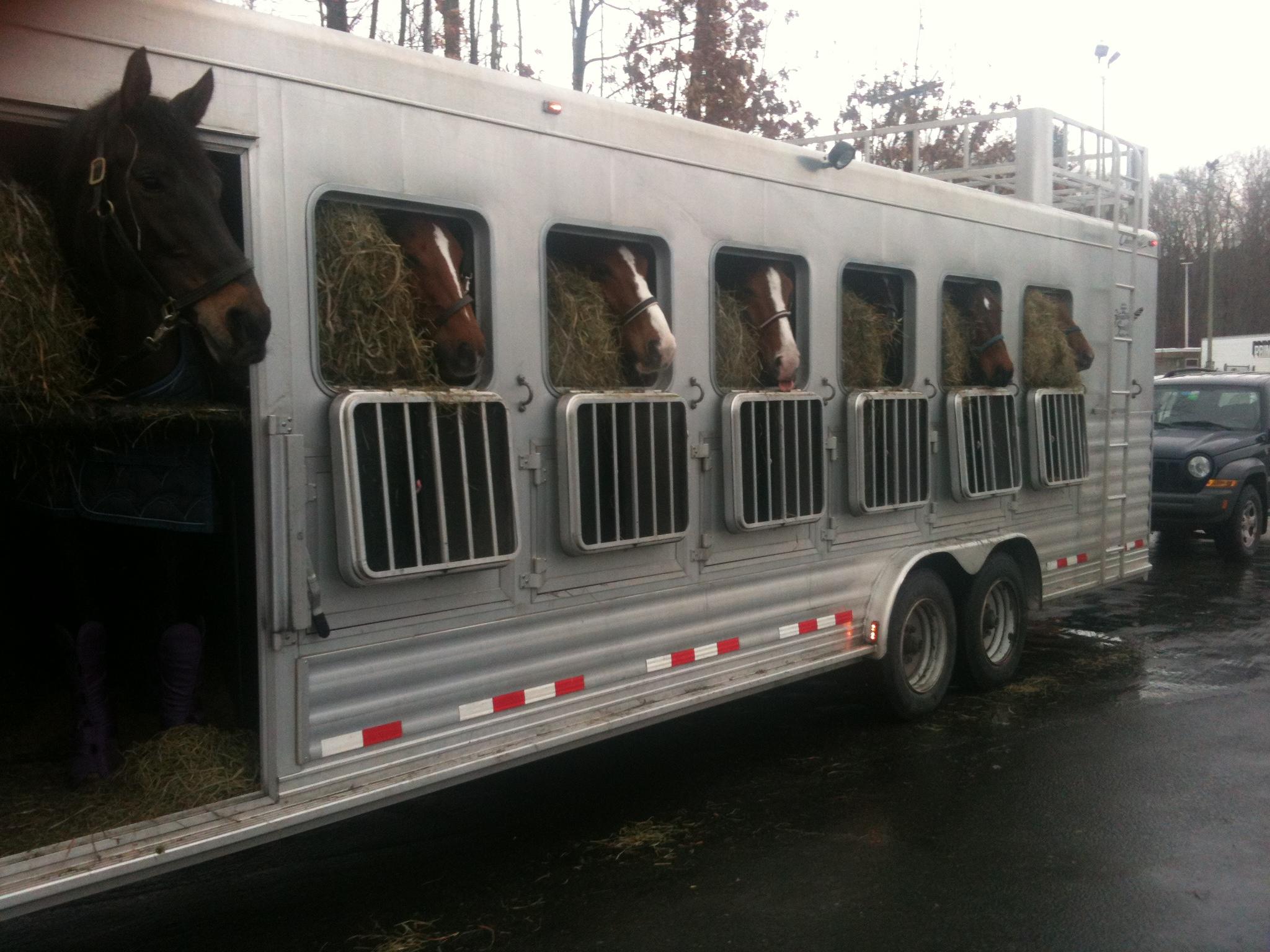
A full load headed from Maine to Florida. Photo (c) Gwyneth McPherson.
Because I worked for a big farm, we often shipped with seven to 10 horses. I was one of three drivers with a CDL, and my philosophy was to stay with my horses through the trip so that I could care for them the whole time. Because of this, we always shipped our horses ourselves.
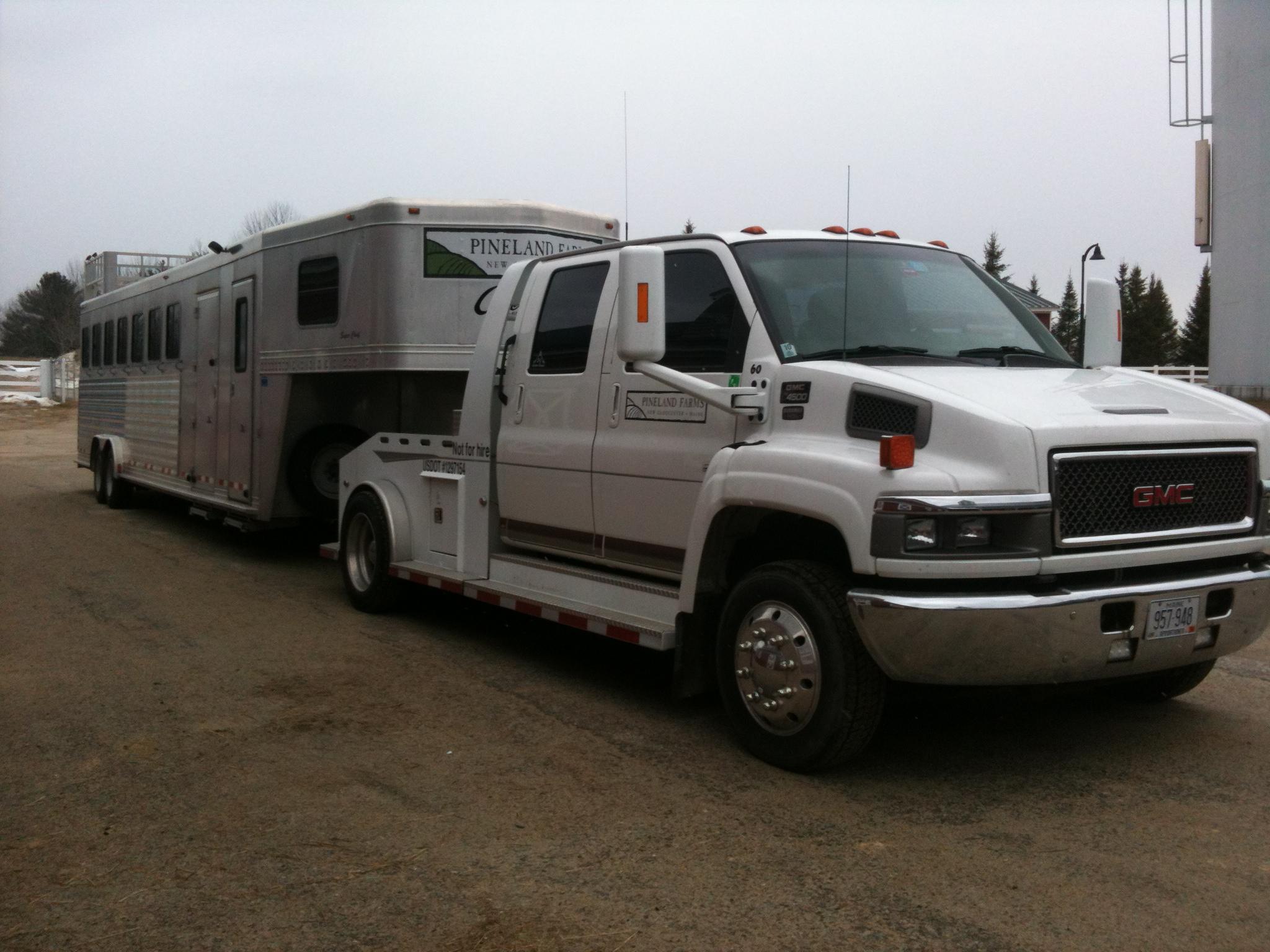
We shipped the horses ourselves in order to maintain the same care they were familiar with throughout the whole trip. Photo (c) Gwyneth McPherson.
As you might guess, there are many philosophies about how to manage this trip from a Federal Motor Carrier Regulation viewpoint, and a horse welfare/veterinary care viewpoint regarding how many days you take, and how often you stop. This shipping aspect tends to generate a lot of discussion. However, the second part of the journey — the settling and acclimating the horses part — is less often discussed, but equally challenging.
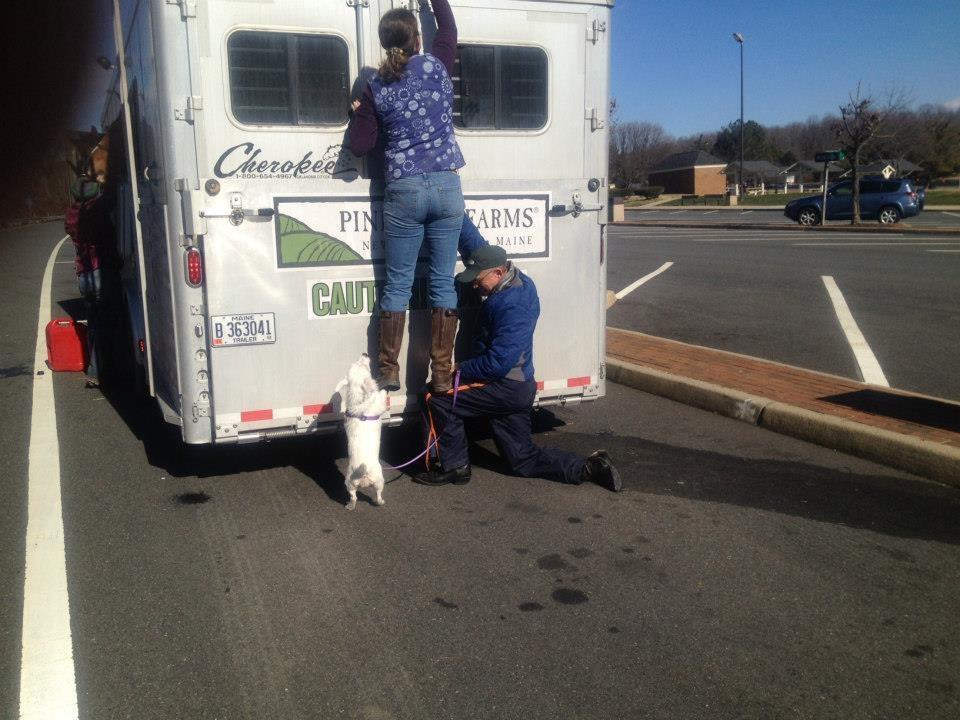
Do not make the trek without serious consideration for how you will handle the challenges. Photo (c) Gwyneth McPherson.
Given that, I thought it would be helpful for me to discuss some of the things you need to think about if you intend to move horses south for training and competing this winter. By no means is this an exhaustive list. Think of it more as a brief compilation of the most common hard lessons I’ve seen, or learned, myself.
- Bring a mini-vet kit. Talk to your vet about which medications they are willing to send with you and make sure you know what they are used for, how to give them, and how much to give. Most likely there is a vet attached to the facility you are heading to, but you need to be ready for the unforeseen.
- It does, in fact, get cold in winter, in Florida (yes, I know this is tragically heinous). You will need heavy blankets. It may be only one or two nights, but it happens. It also gets hot during the winter in Florida. You will need to clip your horse (all the more need for the blankets later). In other words, you need your summer and winter wardrobes for both you and your horse between December and March. If you are from the Northern US and you head to FL for the winter, you must understand that our barns are built for air circulation and catching whatever breeze we can. Almost none of them are built to be closed up and warm when it’s cold like we are used to in New England, for instance. Plan accordingly!
- We have sand, lots of sand. Even if we have nice-looking grass in the summer, it is usually brown between December and March, because it IS in fact winter here. Some facilities do seed or turf their fields and are constantly vigilant about watering and preserving their grass (because under that grass is just more sand). The native sand is deep and has a couple of hidden dangers. First of all, I have seen many a winter of training and showing ruined by leg injuries because of horses running in the deep sand in turn out. I don’t have a great answer on how to prevent this other than vigilance. Horses need turn out. But monitoring their activities while they are playing outside in the sand is a necessity.Furthermore, the microscopic critters that live in our sand rarely freeze to death, so be prepared for skin problems. If you have to clip your horse after he is already in FL, it is advisable that you give your horse a fungal shampoo bath first, do not turn him out before you clip him, and consider leaving him in for a couple days (work and hand grazing are ok, just no rolling and running in the native sand). Keep your fungal shampoo close the whole time you are here.
Also, consider a supplement that binds sand in your horse’s gut. Sand colic is a real (big) thing (here). Feed your horses off the ground, on a mat or in a container. There is so much sand here they eat more of it accidentally than up North.
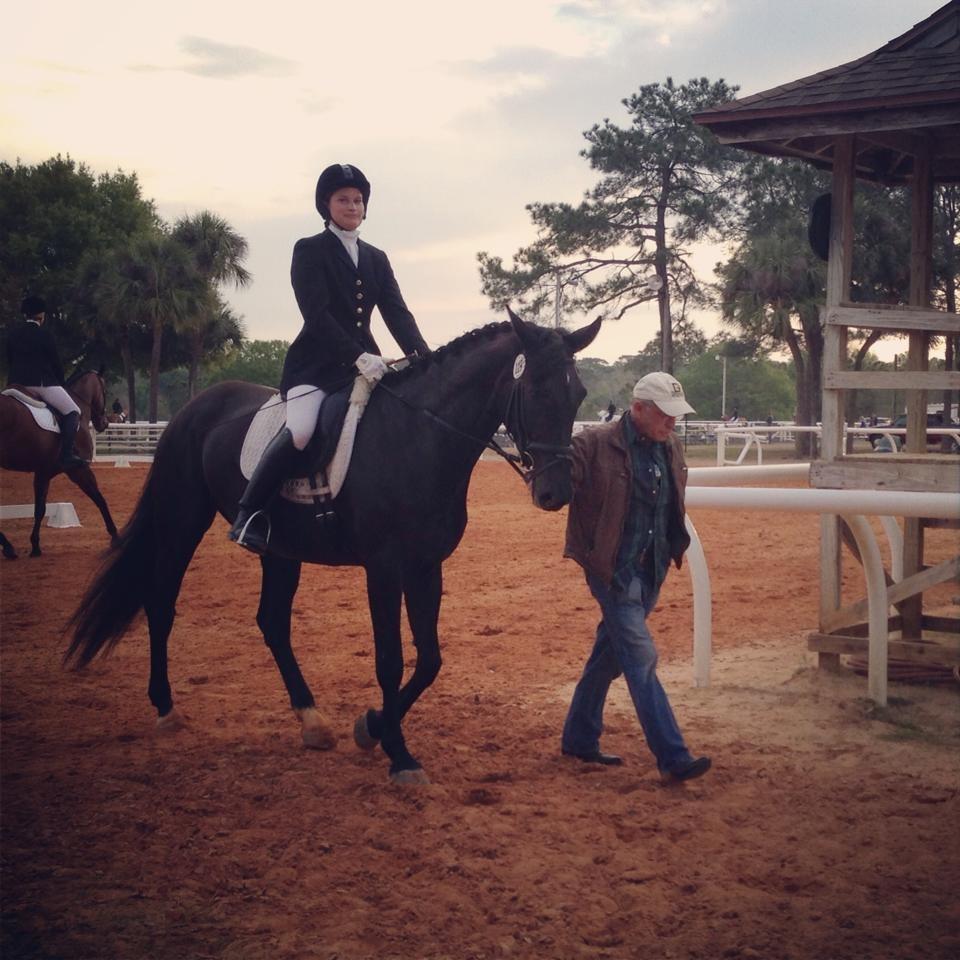
The goal of making the trip to Florida is to have your horses be able to perform at their best. Photo (c) Gwyneth McPherson.
- Most riders and trainers are very aware of the importance of water and electrolytes. This becomes even more important when your horse is moved from the cold North to the warm South and expected to perform at their best. The temperature fluctuations and increased stress of traveling here and acclimating do increase your horse’s requirements for water and electrolytes. Many horses do have impaction colics and stop sweating when they make the transition to Florida. Your veterinarian may have some very good plans to help with these problems. I have learned (the hard way) that feeding salt or electrolytes is far more important here than it is in Maine. Fresh water is always seriously important, but your horse will need more (clean) water available here than at home. Some places in Florida have some very strongly sulfur-smelling water. You may need to get creative in how you mask this smell to get your horse to drink.
- Horses need hay (obviously). If you are at all familiar with shipping horses long distances and acclimating them to a new environment, you know that not all hay is the same. The native hay in Florida (usually referred to as “coastal” hay) is very reasonably priced (due to lack of shipping expenses), unfortunately the potential colic it can cause is not. Just don’t feed it. If your horse did not grow up eating coastal hay, he will very likely not be able to properly digest it. Many horses have very serious or fatal colics because of trying to switch them to coastal hay. Go with the more expensive stuff. It all comes from Canada and Northern/Northwestern US. It is expensive, but your whole point of being here is to ride, train and compete, not to have a college level experience in colic surgery. The good news is that there are hay stores EVERYWHERE. But be aware, many of them are only open for ½ day on Saturday and are closed on Sundays.
- Adrenaline is a real challenge in acclimating a horse after a long journey. You see this when horses are shipped from Europe to the US and shipping long distances within the US. The more seasoned competition horses do tend to get better with this after a few seasons, but not always. The challenge here is that most horses arrive fatigued AND amped up. So, you need to consider how you will manage this. Often horses and riders get injured in the beginning of their trip South because of adrenaline. For example, the horse that gets injured running around in the sand in turn out or being a kite on the end of a longe line. The rider gets hurt because they assume that the horse will be its normal self, and they get on when they shouldn’t. Hand walking, careful turn out, careful longeing, and being appropriately cautious about getting on are important steps to take. Also, horses will feel and look more energetic and rested on adrenaline than they are. It is very easy to overwork a travel-stressed horse. It takes about one week for them to lower their adrenaline levels and be more “normal.”Consider working the horse in two short (15-20 min) easier (just walk-trot-canter, nothing “hard”) work outs per day until they get more normal. This can be either longeing or riding, or a combination of the two. Consider hand walking once or twice a day as well. And also, start turnout with a meal. Feeding your horse his lunch or supper in turnout, after hand walking or a light workout, will increase the chances that he stays quiet in the sand.
Never underestimate the effect of adrenaline on your horse’s behavior. Photo (c) Gwyneth McPherson.
No matter how many times I have brought horses from Maine to Florida for the winter, the process was stressful for both me and my horses. Staying focused on the goal of training and competing and using common sense and learning from people who had learned how to make the transition successful made for fewer emergencies and more successes. That said, do not make the trek without serious consideration for how you will handle the challenges. Have a vet kit with you, keep your fungal shampoo close, never feed coastal hay, invest in electrolytes and a sand-binding supplement, and never under-estimate the effect of adrenaline on your horse’s behavior.
Remember: limited knowledge is limited judgment.

Gwyneth and Flair in competition at Grand Prix. (c) flatlandsfoto.
Gwyneth McPherson has over 35 years experience competing, training, and teaching dressage. She began her education in in the late 1970s, riding in her backyard on an 11 hh pony. Her first instructor introduced her to Lendon Gray (1980 and 1988 Olympian). who mentored Gwyneth for a decade during which she achieved her first National Championship in 1984, and her Team and Individual Young Rider Gold Medals in1987.
In 1990 Gwyneth began training with Carol Lavell (1992 Olympian) who further developed Gwyneth as an FEI rider and competitor. Gwyneth achieved a Team Bronze in 1991 and a Team Silver in 1992 in the North American Young Riders Championships, and trained her stallion G’Dur to do all the Grand Prix movements while riding with Carol.
In 2008, while Head Trainer at Pineland Farms, Gwyneth began training with Michael Poulin (Olympian 1992). Michael was trained by Franz Rochowansky (Chief Rider for the Spanish Riding School 1937-1955). Michael has shared much of Rochowansky’s knowledge and wisdom with Gwyneth, completing her education as a Grand Prix rider, trainer, and competitor.
Gwyneth’s teaching and training business, Forward Thinking Dressage,is based in Williston, FL. In addition to teaching riders and training, Gwyneth also loves sharing her knowledge of the sport and art of dressage as well as discussing relevant topics pertaining to the training itself and the current competitive landscape.

