



Thoroughbred Logic, Presented by Kentucky Performance Products: Frenzy at the End of the Race Meet
“It is not the track and its runners that are in a frenzy, but rather the movement towards getting these horses out, the sales from the backside.”
Welcome to the next installment of Thoroughbred Logic. In this weekly series, Anthropologist and trainer Aubrey Graham, of Kivu Sport Horses, offers insight and training experience when it comes to working with Thoroughbreds (although much will apply to all breeds). This week ride along as Aubrey shares her logic on end of meet horse sales.
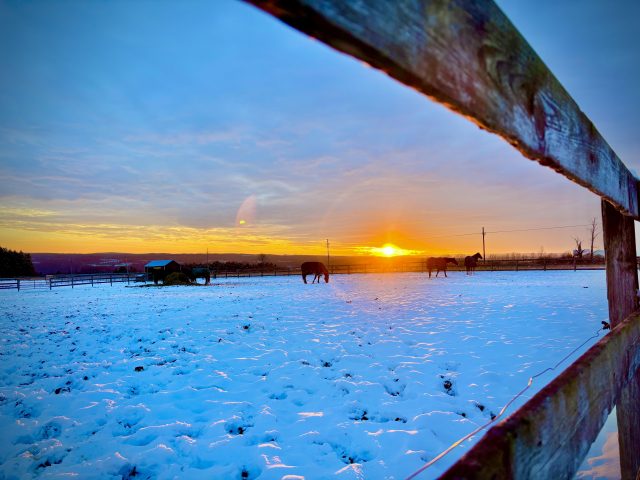
Yes, yes, it is already very much winter. I’ll pretend I can’t see the snow or hear the wind… Down south winters are short, wet, and uncomfortable. But they don’t fully change the shape of life. Hell, you can compete year round. Up here, folks close their shops, hunker down, and wait. The region takes on a form of hibernation that settles in and stays as warm as possible through the rough months. And then summer hits. Every farm stand erupts with vegetables, color, life. The thousands of above-ground pools are suddenly in use, and the showing season is ON. It is electric. Vivid. Wild. A frenzy.
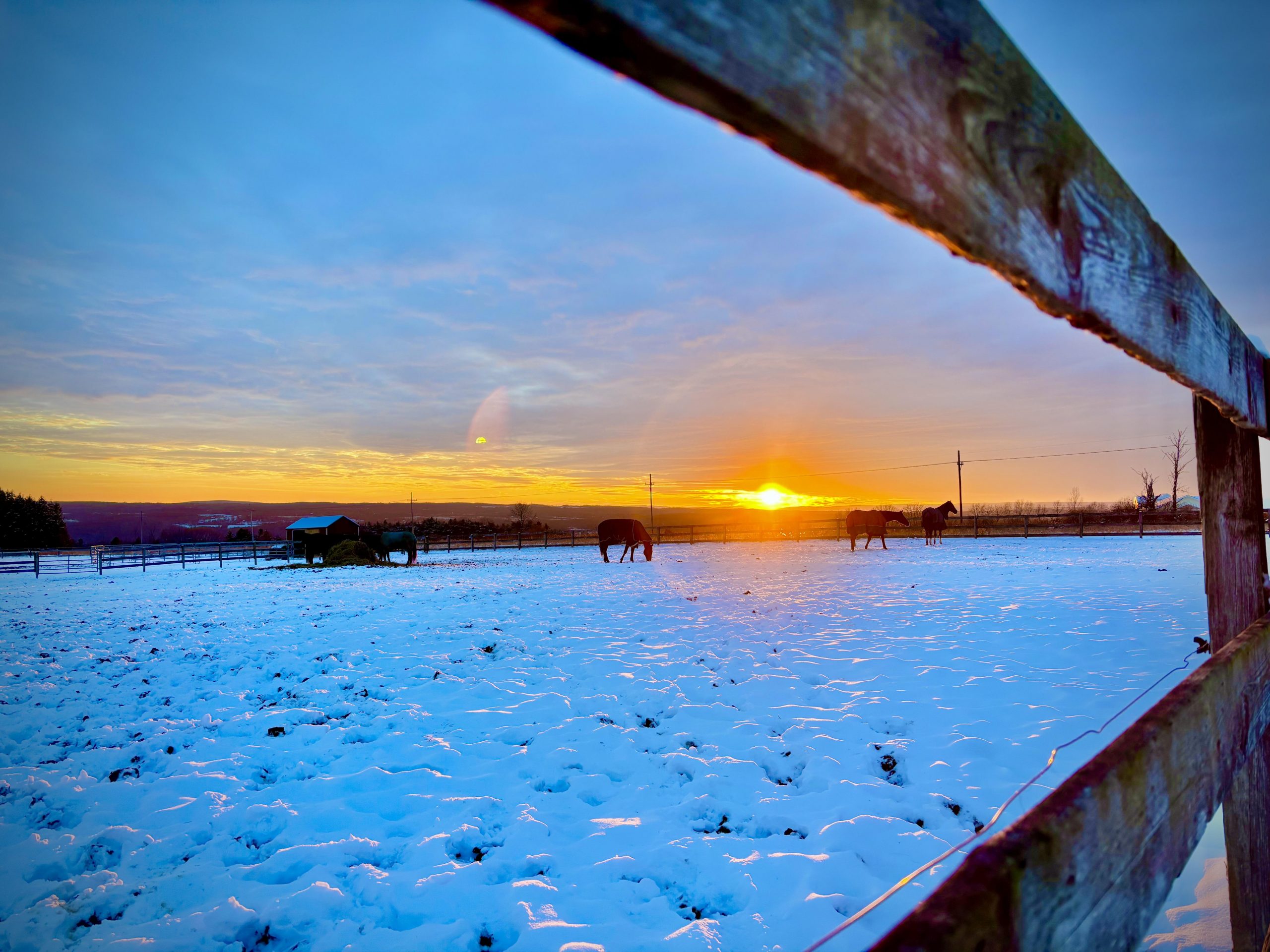
A very recent view. Photo by author.
The idea of a “frenzy” comes into play in two ways up here: The short New York summers, and the end of the meet at the track. In these spaces, the crush of activity and energy are heightened. And at the track, it is that frenzy that shapes the future of so many horses.
The “meet” is effectively the equivalent of the competition season at the track. This year at Finger Lakes, it ran from April 28 to November 26, 2025, with races every Monday, Tuesday, and Wednesday. And once we hit November, the frenzy began — escalating as we careened into the Thanksgiving holiday. It is not the track and its runners that are in a frenzy, but rather the movement towards getting these horses out, the sales from the backside.
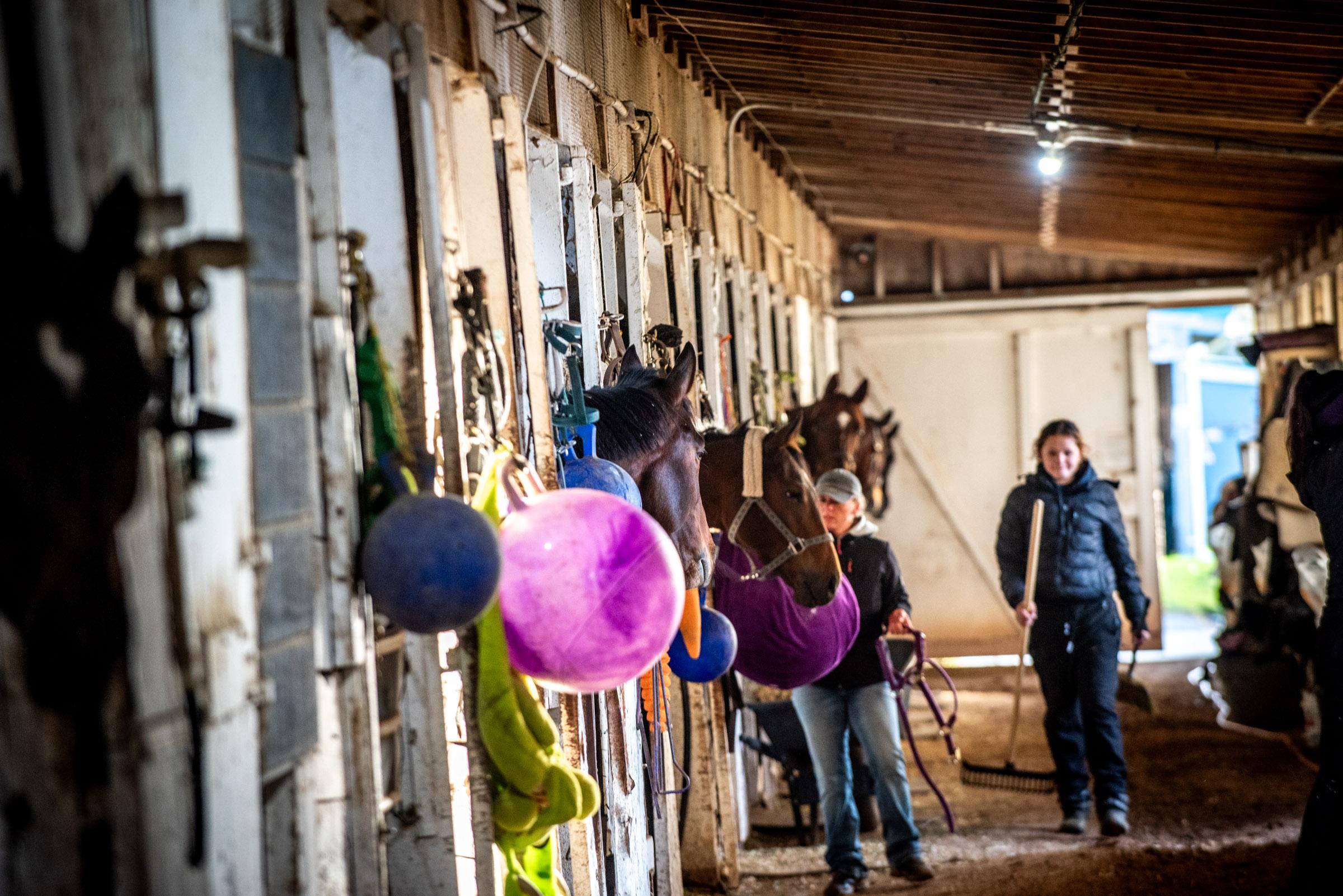
Dana Saul’s barn on the backside of Finger Lakes Gaming and Raceway. Photo by author.
Here’s the logic: Finger Lakes, like some tracks, does not allow horses to winter in their race stalls. (Some other tracks move horses into winter stalls at the track, and some allow year-round residency.) So, when the end of the meet hits at places like Finger Lakes, there’s a short “after” period when all transitions out must happen. That means each trainer must have space somewhere else for each of their horses. It may mean taking them to another track that is still running in the winter months (like Aqueduct — this is changing in 2026-27 though — or Gulf Stream), moving them to the farm (if a trainer has one) and tossing them out in fields, or boarding at local spaces specifically geared for this purpose. Either way, it is a new and specific expense per horse — and often with 10 to 20 Thoroughbreds in a string, it adds up. Fast.
Most race trainers — at least at tracks like Finger Lakes — are not the Bob Bafferts and Todd Pletchars of the world, and money is tighter than one might imagine from the outside. Wintering — paying for transport, board, feed, and care through the cold season — absolutely is worth it if that horse will literally earn their keep in the following season when they go back to running (or if the trainer just wants to give them a shot and see how they do in the spring). But also, when a horse is not performing at its peak, or it simply is not that fast, many trainers just want their horses to be able to move on to other less demanding careers with great people who will love them.
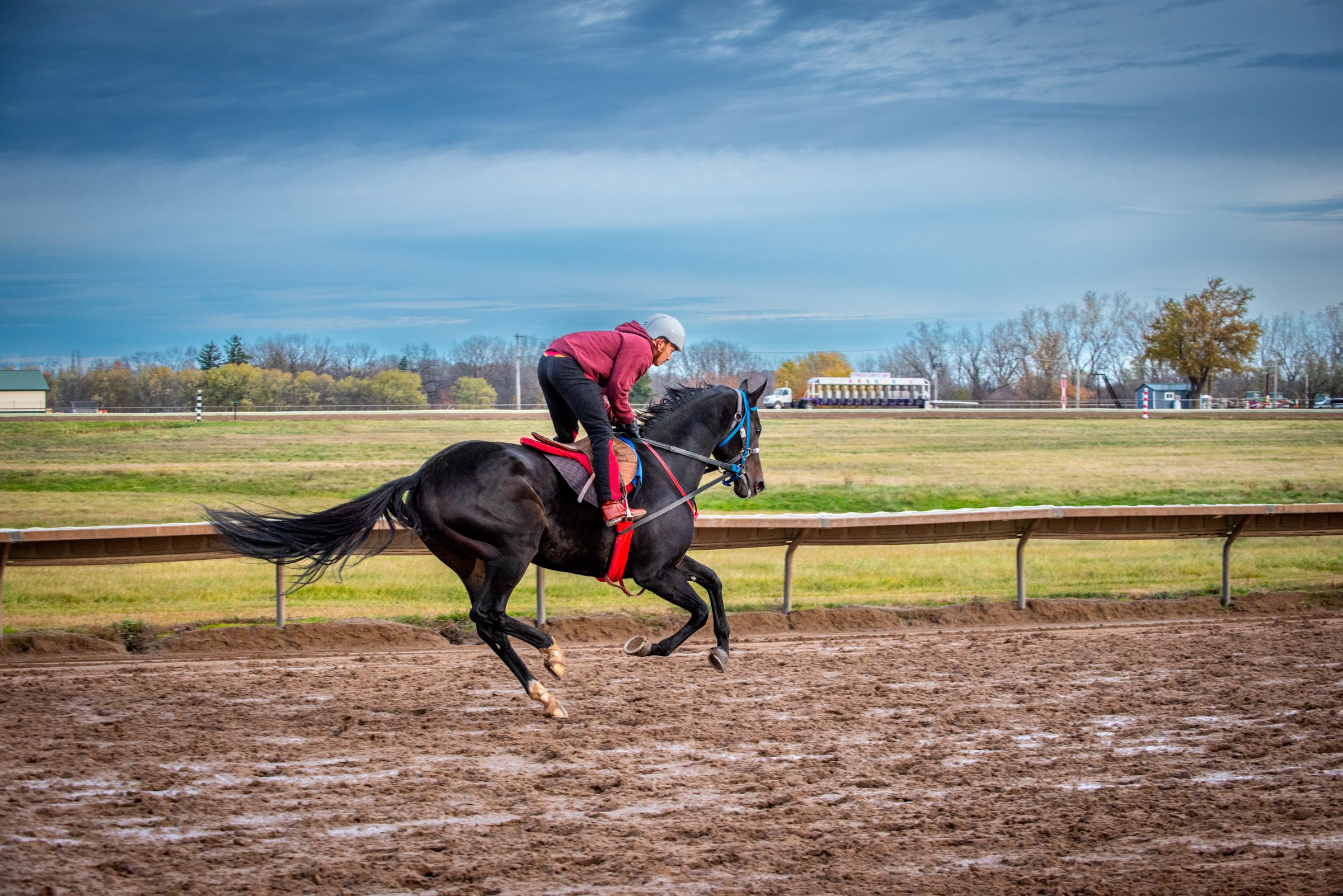
A morning gallop at Finger Lakes during the tail end of the season. Photo by author.
But anyway we look at it, there is desire to move ponies as the meet ends. And in so doing, it becomes an exponential crush of sales and the attempt to get these horses to good homes (or in some cases, just any home) before getting asked to leave their stalls.
For folks who are not inside the racing industry, this means that in casual perusal of Facebook posts on OTTB groups, you’ll see a lot more “fresh off the tracks” available in the late fall (or as relevant to the end of the meet in specific places). And for those who want to venture to the backside themselves, it means that the horse that might have been “listed” for $5K during the running season, might be able to hop into a trailer for 2,000 cash.
This dude was recently placed in a fantastic fox hunting home:
Finger Lakes Finest Thoroughbreds does a hell of a job up here helping to get these horses to homes and filling the gap for a lot of race trainers who don’t have time or the network to advertise to the sport horse folks. Finger Lakes Finest volunteers photograph, take jog video, and write descriptions to the best of their ability and knowledge about the horses who are ready to be rehomed.
If you watch their posts on social media or their website, you’ll see them trickle in during the race season — one or two horses to list here or there. And then there’s the ramp up to the end of the meet and the pressure to get these kids to homes. Horses are listed and placed at speeds faster than is easy to track.
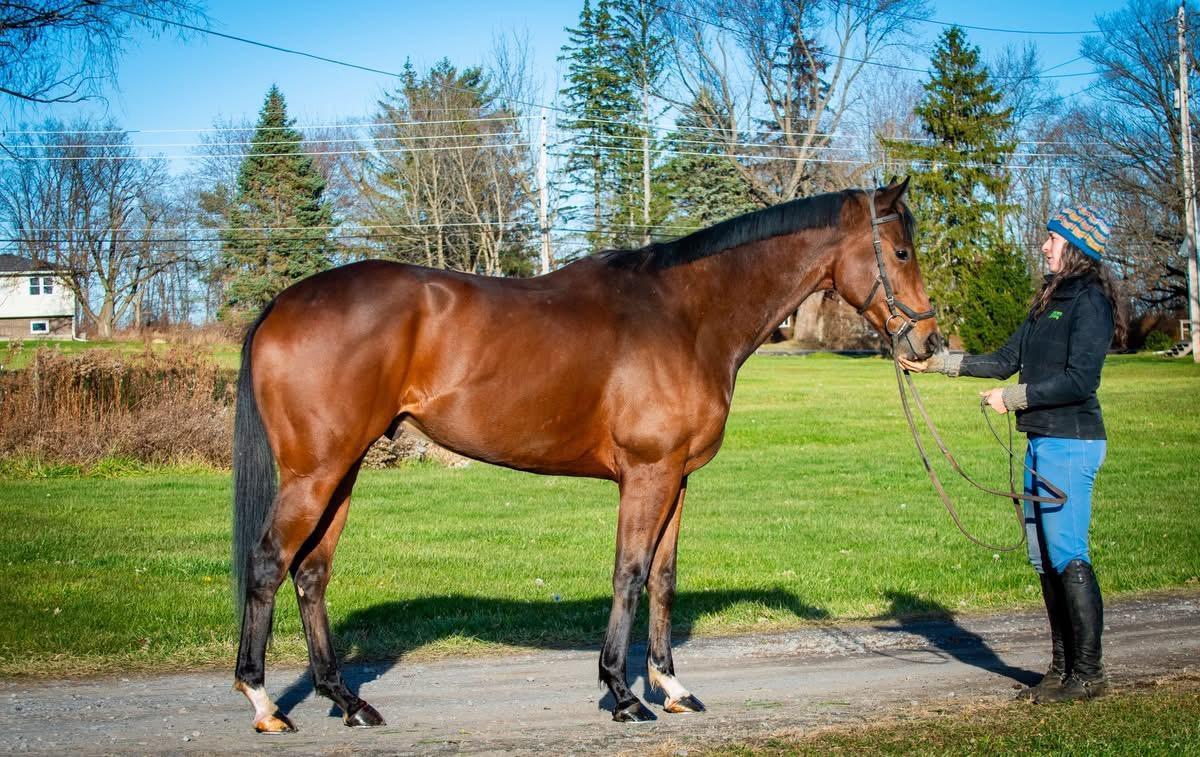
Bay Bank was listed from Finger Lakes, but eventually found his way from there to here — and now on to his new, hopefully forever, home. Photo by Lily Drew.
This frenzy of sales and rehoming means that in the last few weeks at the track, horses likely will be sold out from under people. Oh, you want to hold for a vetting? Get an X-ray of that ankle or that hock? You can book it, ask the trainer, have permission, but there’s no guarantee that the horse will still be there on the Monday morning when the vet shows up to take the images. Sure, in some cases they will be, but equally likely that the horse has walked onto someone else’s trailer.
This might seem unfair. And from a buyer’s perspective, I get it. A few years ago, when helping a client shop, we had three horses sold out from under us. She wanted to do a PPE. By the time the vet would show up, the horses simply no longer belonged to the trainer. I was frustrated and angry. My client was deflated.
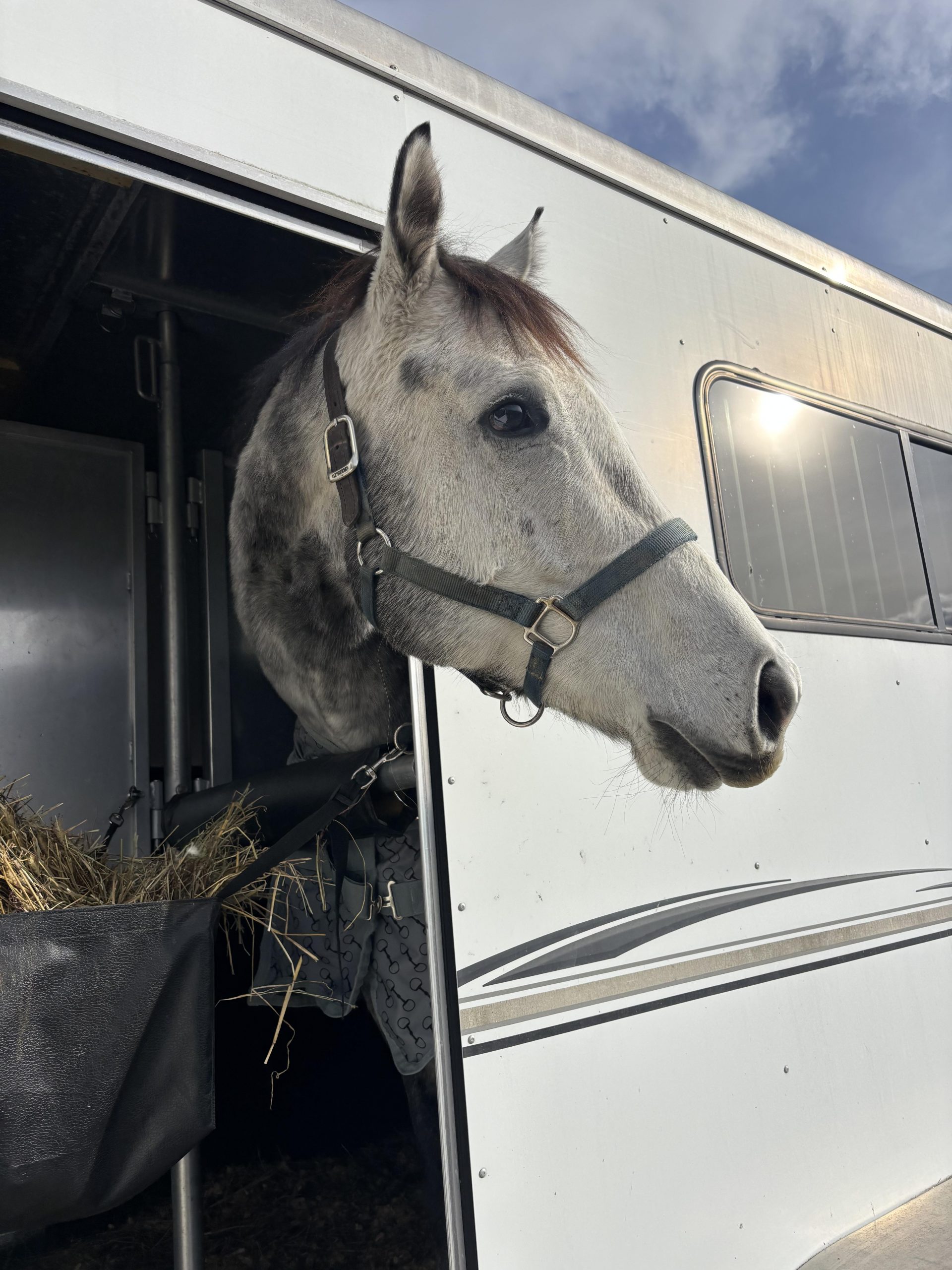
Edward (Exclusive Entry) sold from Kivu to a great home in PA, but if you brought that same trailer to the track, you could fill it easily in the last days of the meet. Photo by author.
Hell, three weeks ago, I had three horses slated to come to my barn from different tracks and trainers. Every one of them was almost sold elsewhere, despite the fact that I had agreements with trainers and a slotted ship date. I was annoyed at first, but also realized their financial realities and the logistics of the winter. Had I showed up and put them on my trailer myself (damn GA to NY registration issues), it would have been fine. But having to wait on shippers for a few days, nearly all of those horses walked into other hands.
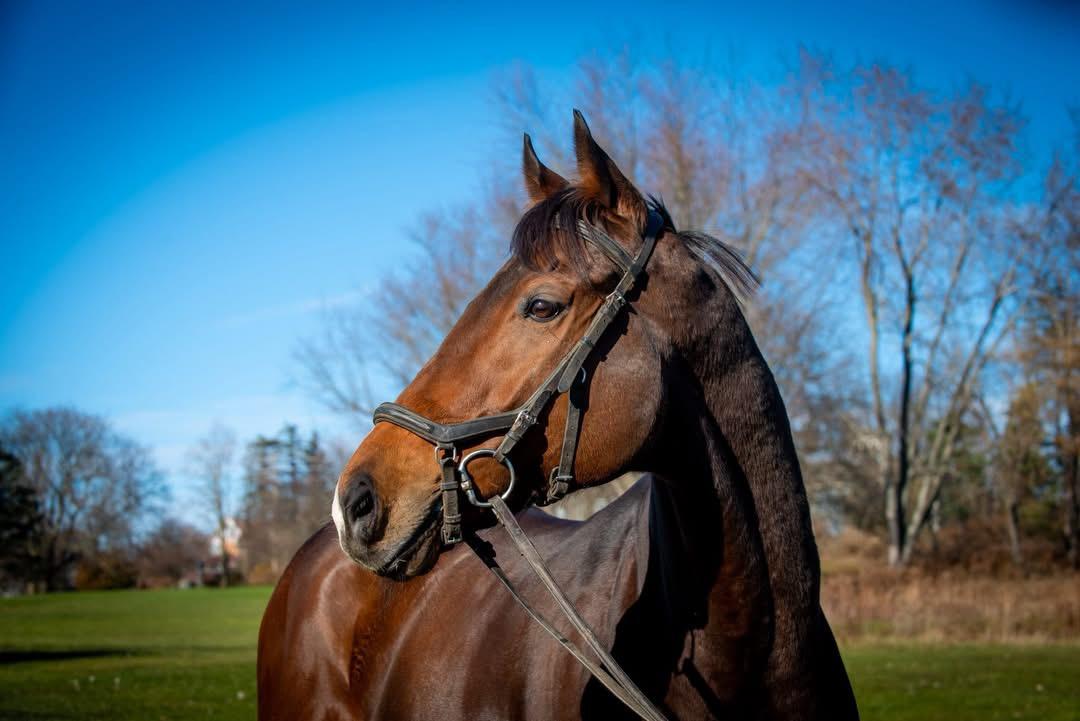
Gandy Dancing nearly ended up continuing to run at Charles Town, but to my luck that option fell through and he got to come home. Photo by Lily Drew.
But looked at from the track trainer’s point of view, sure, money talks. But so does the trailer that gets the horse out of the stall and safely somewhere else. Many trainers will hold for your PPE or radiographs. But regardless of whether the horse would have vetted clean or not, the risk of the buyer hemming and hawing and then passing after radiographs or the PPE is still present. And that creates the risk that the trainer may be left with a set of X-rays and a horse that needs to be fed another day and potentially managed into or through the winter.
So in the frenzy that is the end of the meet, cash is king — and if there’s a rig waiting in the wings, all the better. Buyers need to be flexible and everyone needs to move fast. Most trainers do honestly care about the placement of their horses. But they also care about ensuring that they simply have a place to put them when everyone has to be out.
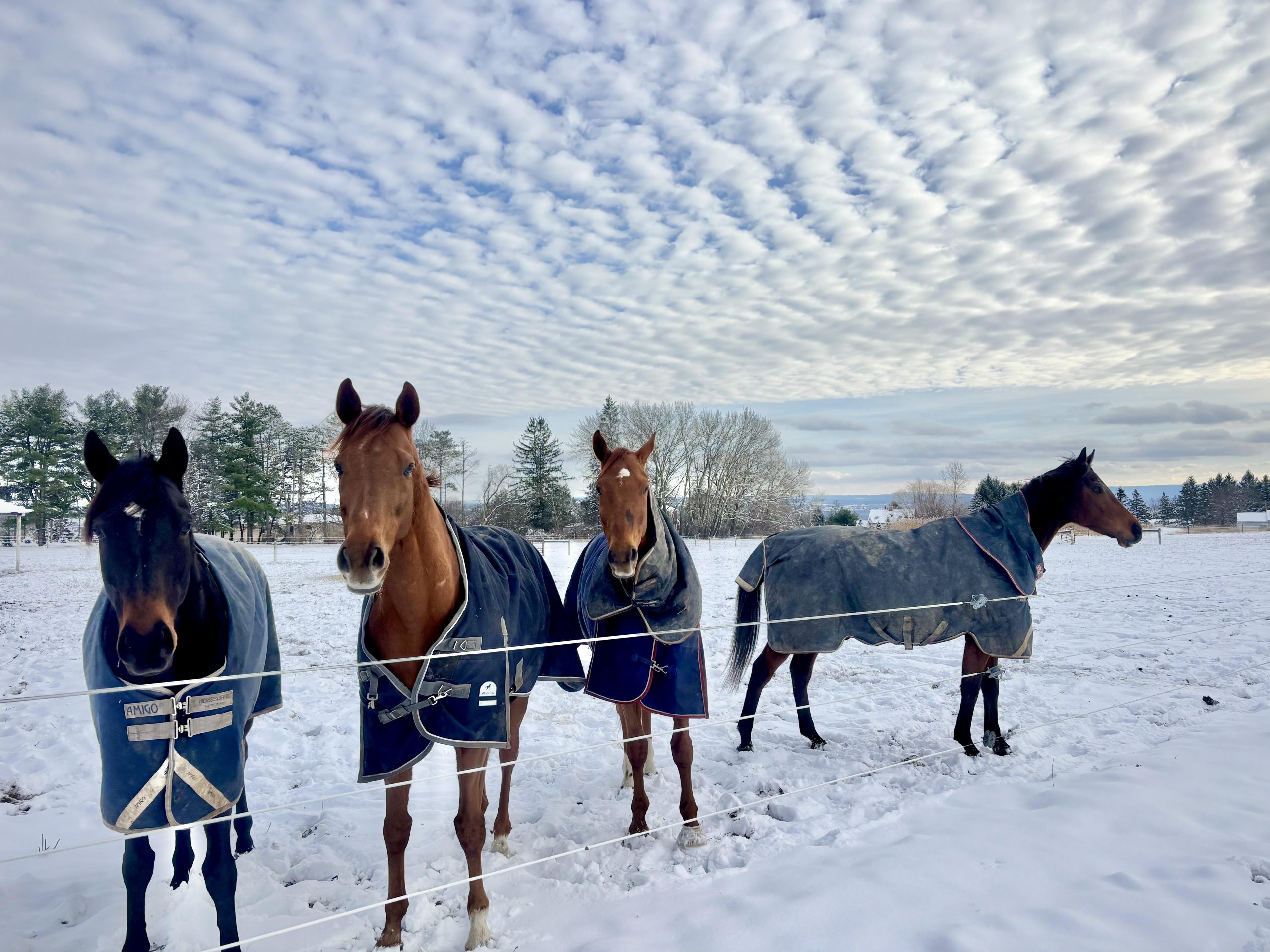
My show string figuring out how to winter as well… from left to right Neil (Lute’s Angel), Indy (Star Player), Artie (Reunion Tour) and Emmett (Oboy). Photo by author.
So if you want a deal on a horse from the track, shop a the end of the meet and help someone avoid having to winter them. But if you want THAT horse, and you want to be able to vet it and make sure things are perfect, you might need to coordinate that a lot earlier in the season, expect to pay more, and figure out how to make sure they don’t walk onto the most available trailer.
Happy holiday horse shopping, folks — enjoy the frenzy and the slow down that follows.
About Kentucky Performance Products, LLC:
Struggling with seasonal vitamin E deficiency? Studies show that vitamin E levels drop when horses don’t have enough access to fresh, green grass. Elevate® natural vitamin E can help. A research-proven, powerful antioxidant, Elevate maintains healthy muscle, nerve, and immune functions by delivering a highly bioavailable source of natural vitamin E that is preferentially absorbed and retained in a horse’s tissues. If your horse is struggling with sore, stiff muscles, neurological disorders, or a poor immune system, ask your veterinarian about supplementing with natural vitamin E.
Kentucky Performance Products creates scientifically proven supplements for your horse. Our supplements provide solutions to the everyday challenges facing your horse. The horse that matters to you matters to us®. Learn more about KPP at KPPusa.com.

