



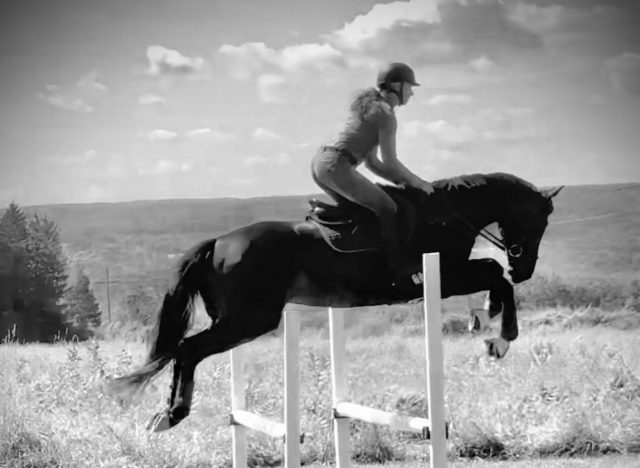
Thoroughbred Logic, Presented by Kentucky Performance Products: Dosage Profile and the Sport Horse
“Dosage tells us about the races these horses were bred to run. It sometimes tells us about the conformation needed to run those races well … But what dosage does not measure is heart and drive.”
Welcome to the next installment of Thoroughbred Logic. In this weekly series, Anthropologist and trainer Aubrey Graham, of Kivu Sport Horses, offers insight and training experience when it comes to working with Thoroughbreds (although much will apply to all breeds). This week ride along as Aubrey shares her logic on the meaning behind a horse’s Dosage Profile.
I’m a nerd. We all should know this by now. The fact that I love peeking at a Thoroughbred’s Dosage Profile is just one more data point of proof to that fact. So hang tight, I’ll try to keep this from getting too bogged down in the numbers — but this is pretty cool.
In short (because I’m never going to convince you to read through the rest of this nerd jargon otherwise), I use the dosage profile to predict the conformation of the horse. Yep, a set of numbers often will tell me whether the horse in question is going to be a horse that I’ll want to purchase to event or if perhaps it is more built to be a ranch or barrel horse. Stereotypes abound in those statements, but bear with me — I’ll walk you through it.
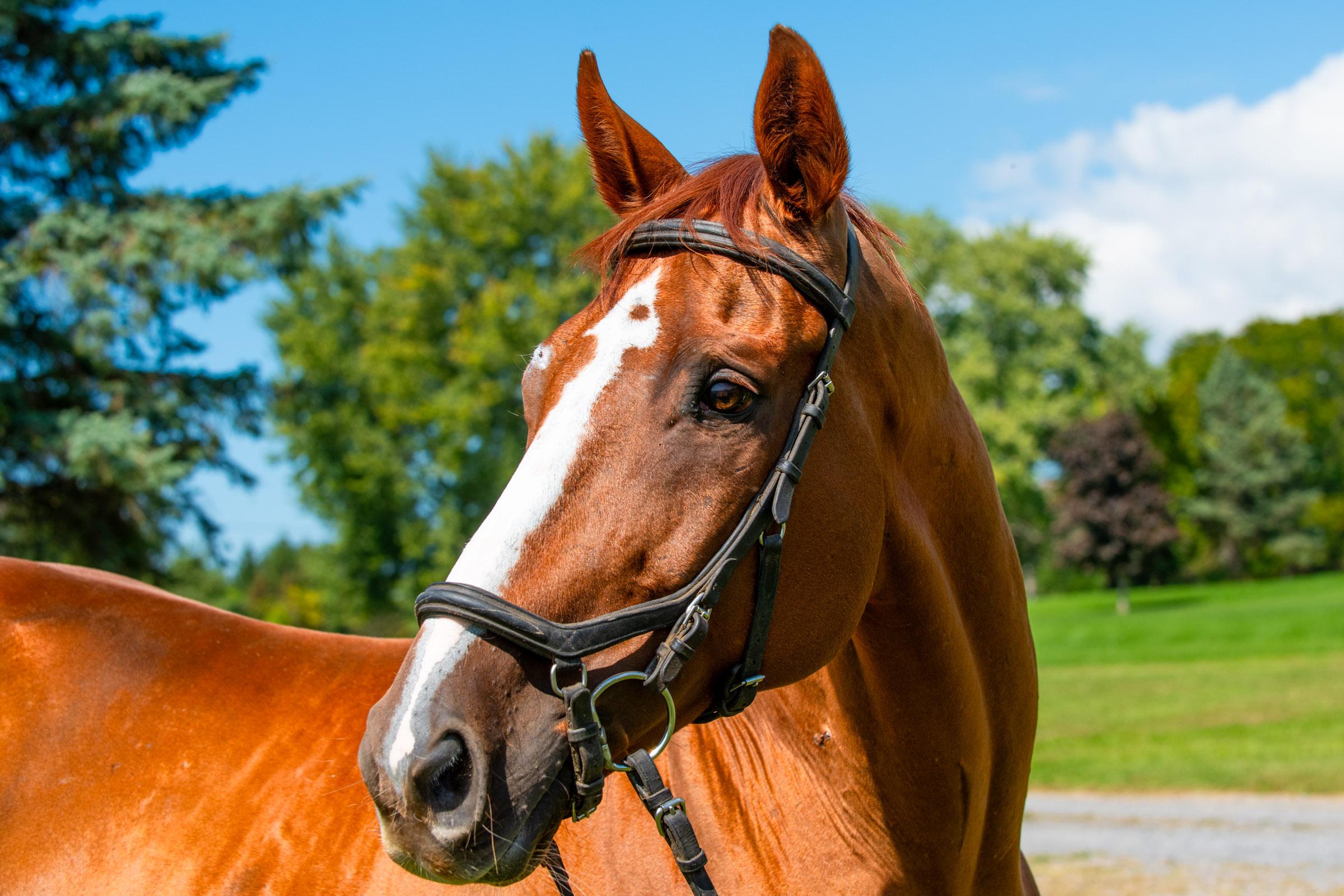
C The King ran 84 times and aged out of racing at 12-years old, bringing in a little over $100,000 (see next image for his dosage). Photo by Lily Drew.
Every Thoroughbred has a Dosage Profile (DP) – you can find it listed near their pedigree in most spaces. On the popular Equineline.com it is listed below after noting the breeder and amounts of intentional inbreeding in the pedigree. They are a set of five numbers unrelated to each other.
For instance, my most recent warhorse purchase, C The King has the dosage profile of “8 0 7 2 1”.
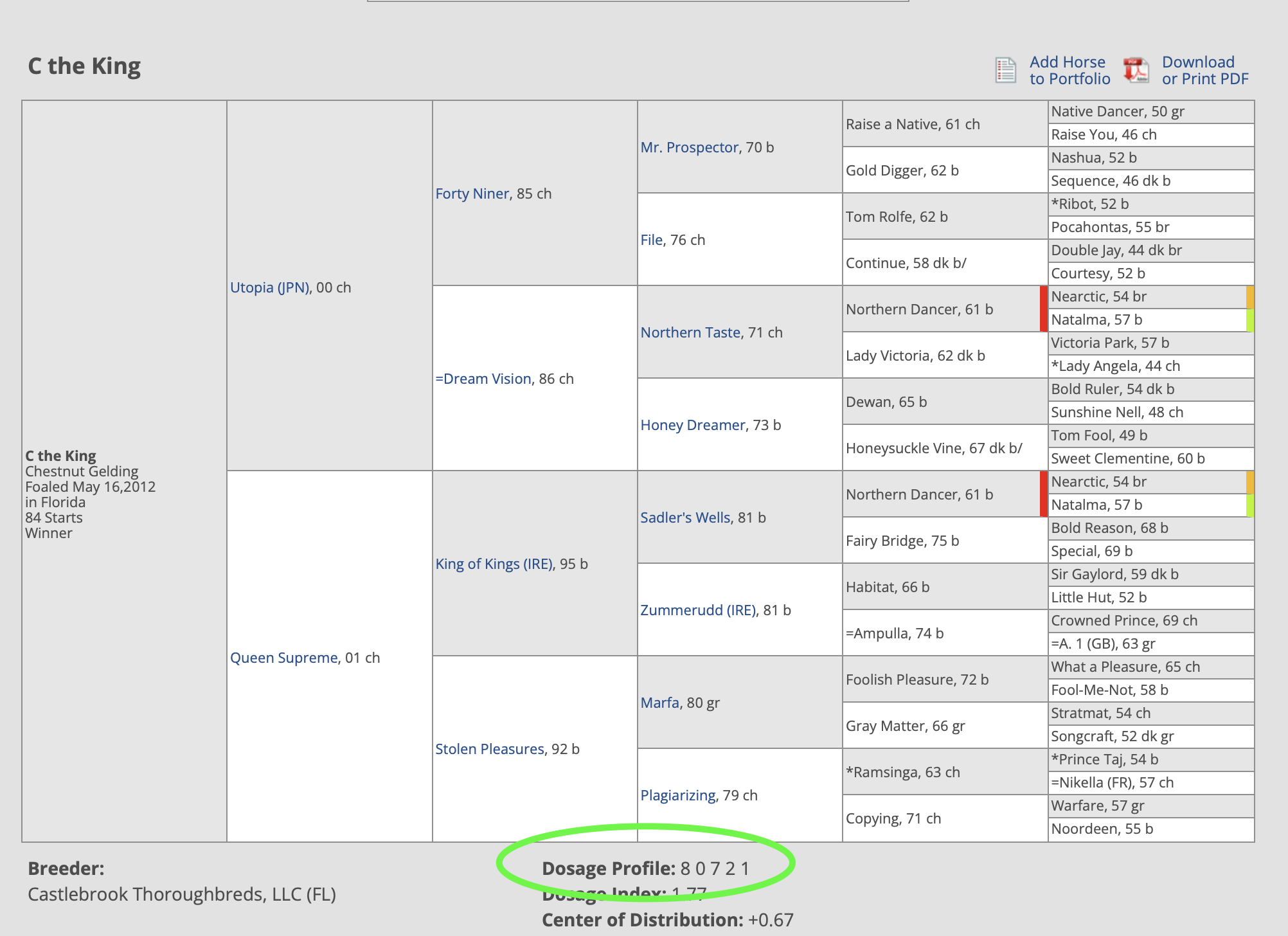
C The King’s pedigree complete with his dosage profile. Source: Equineline.com
In technical language, each number in the DP tells the reader how closely related a horse is to the “Chefs-de-Race” — the great, influential sires of the times. A current list of the CdR can be found here. Each sire for four generations back in a pedigree is examined and the closeness to the greats is linked to each type of race — sprints down through the longer distances of two miles and above. When the Chef-de-Race is in their first generation, they are assigned 16; second generation 8, third generation 4, fourth generation 2. When there is no Chef-de-Race from that assigned class, the number is 0. Thus, the higher the number, the more closely bred this horse is to the best in the industry to that type of race.
The numbers are listed in order from these types of sires:
- Brilliant (B): Sires that contribute to early speed and precocity.
- Intermediate (I): Sires that contribute to middle-distance speed.
- Classic (C): Sires that contribute to stamina and the ability to perform well over classic distances (typically 1 1/4 miles).
- Solid (S): Sires that contribute to stamina and long-distance ability.
- Professional (P): Sires that contribute to extreme stamina, typically effective at long distances (2 miles and above).
(The descriptions here from: https://www.pedigreeonline.com/knowledgebase/reports/dosage-profile-chef-de-race)
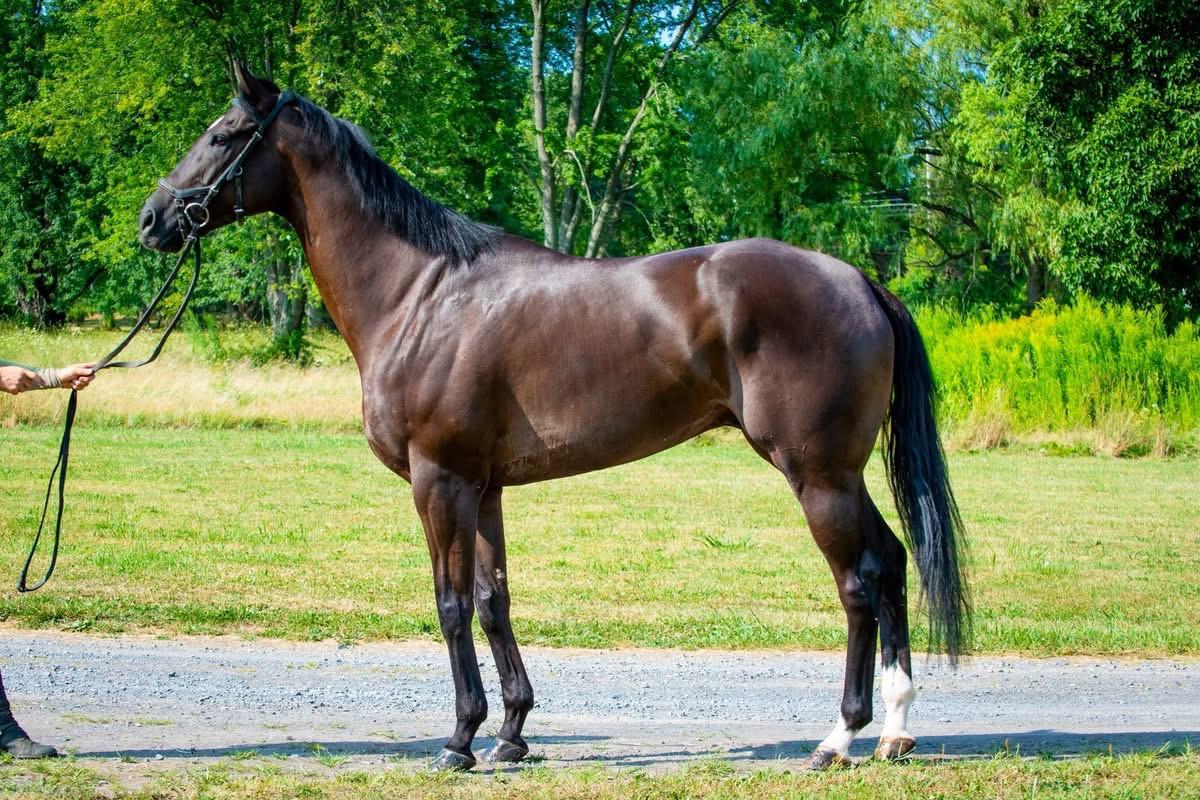
Ripe for Mischief (Platypus) has a dosage of 6 3 9 0 0, so I’d expect him to be shorter backed, cattier (with that 6) and yet balanced with a good hip from the 9.
The dosage profile of numbers tells me an enormous amount about their breeding, the goals of the breeder and what this horse might be good at after retiring based on their conformation. So let me edit that dosage from what the race industry sees to what I see in their second career:
- Brilliant: Often slightly downhill, smaller horses, with a shorter pulling stride and ability for quick agility, straighter shoulder and potentially shorter neck and back.
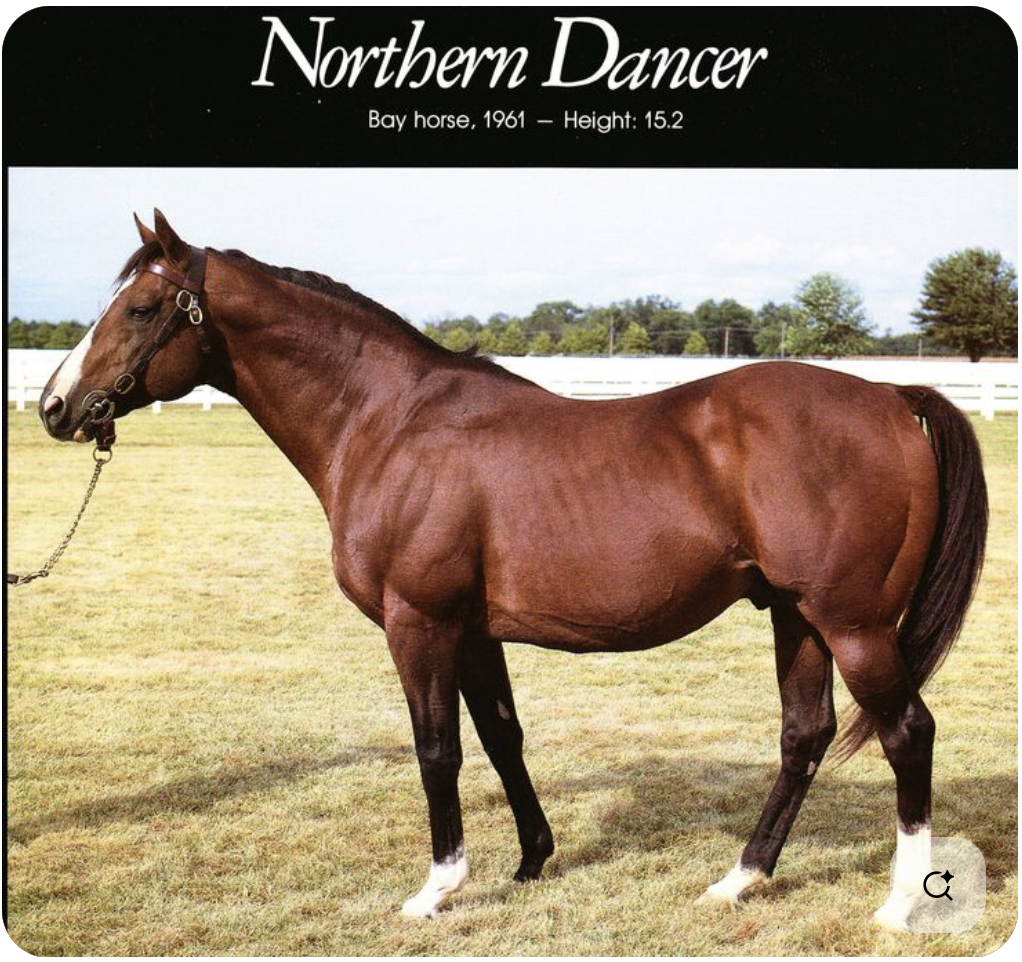
Brilliant CdR Northern Dancer featured in the Windfields Farm stallion brochure circa 1984. Northern Dancer is a Chef-de-Race for the Brilliant category.
- Intermediate: Somewhat level, may still be downhill, may still have a shorter stride (but this grouping seems to be a catchall for those between clear sprinters and classic mid distance horses)
- Classic: Very common breeding for American Thoroughbreds. Level if not slightly uphill build, longer stride, often “good” movement – somewhat more flat kneed but this is no guarantee of show hunter perfection. The shoulder likely slopes more here and there is usually a matching, quality hip angle. The neck will likely be longer than the Brilliant horses.
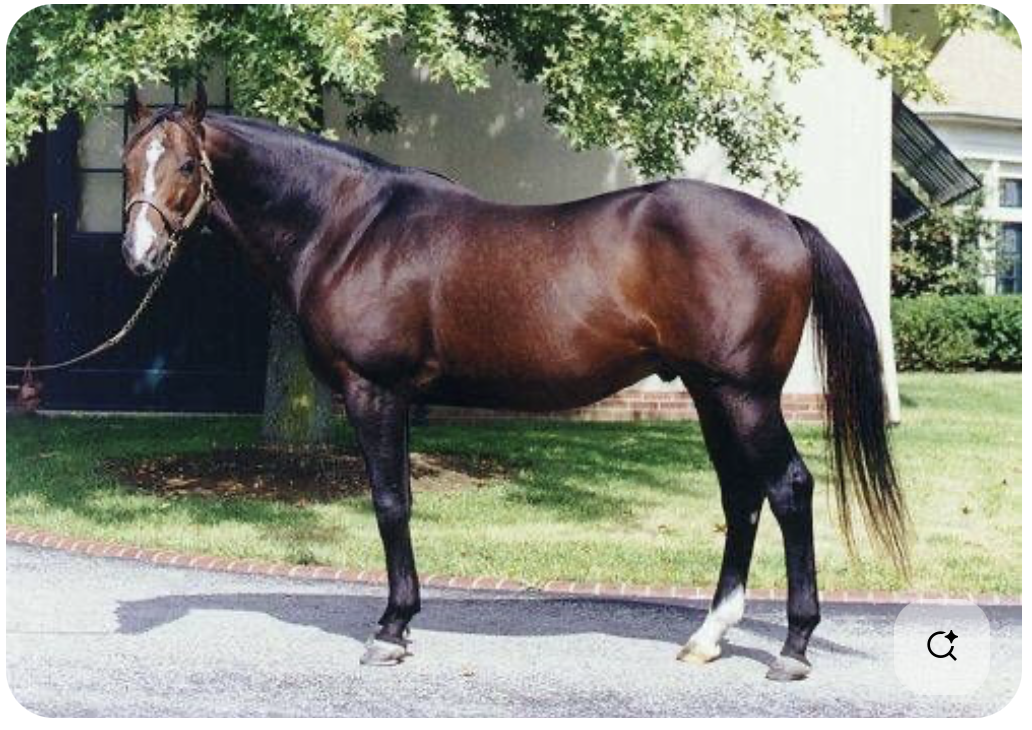
Classic CdR AP Indy circa 1992. Courtesy of Pinterest of all places…
- Solid: We see less and less of these horses in US breeding. International breeding such as horses from Ireland, England and Europe or Japan tend to show numbers here. These horses are often bigger and have longer sloping shoulders, longer backs, more open strides and generally make the impressive uphill look that eventers, hunters and equitation riders look for. The longer distance also in some ways implies bigger bone. They might not be as light and catty as their sprinter cousins, but the bone lends itself to careers in fox hunting and eventing.
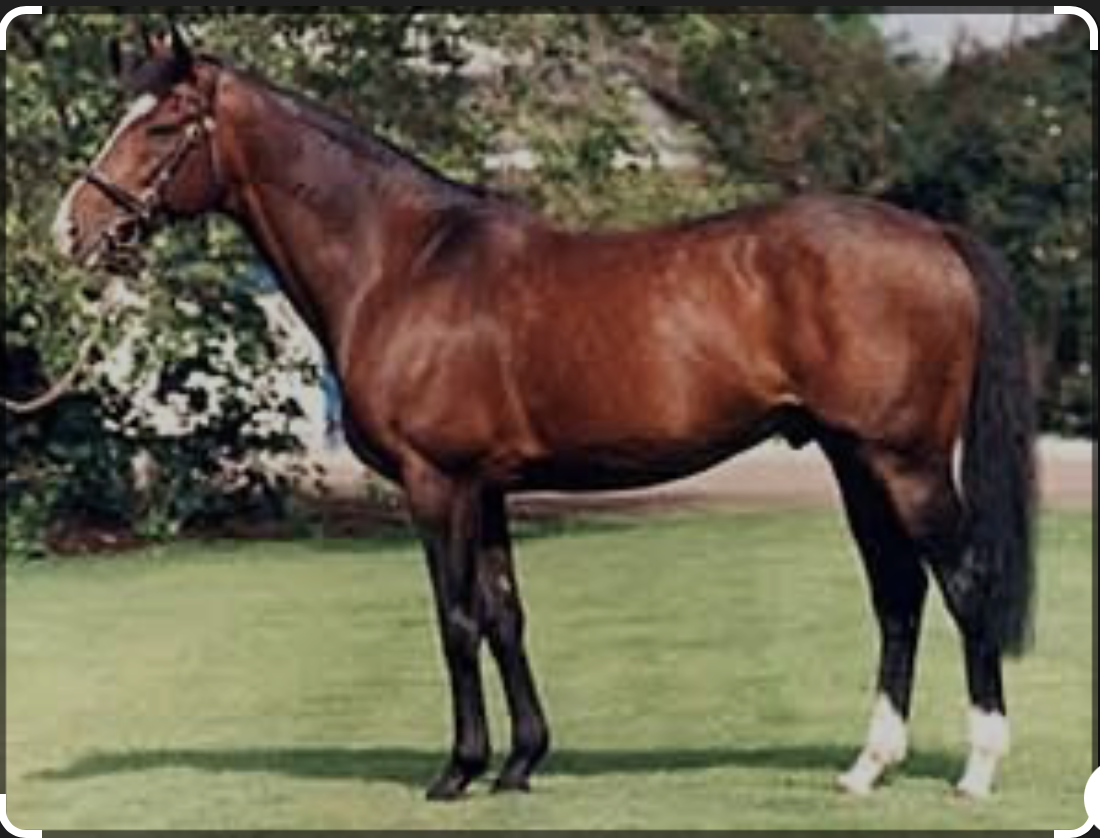
Solid CdR Saddler’s Wells at stud. Photo from Bloodhorse.com
- Professional: These long-distance horses will be fox hunting and eventing cross country dreams. Huge ground covering strides, uphill build, often bred to jump/run timber races or steeple chases. Again, we see very little of this in the US, but it often adds uphill builds, thickness to the bone stature of a horse, bigger joints, and the durability of a horse built to run different terrain for longer distances.
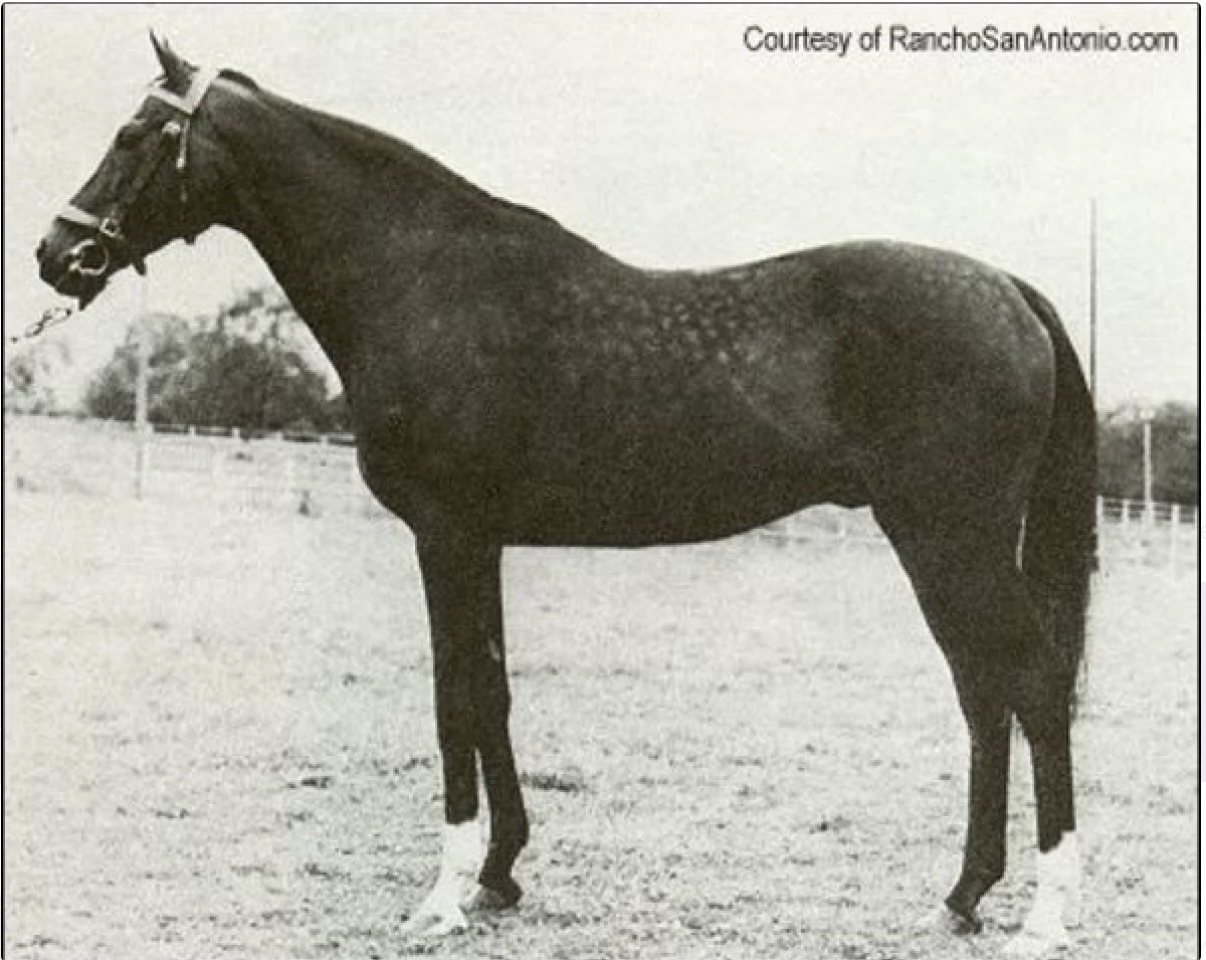
Professional CdR French-bred Stallion Wild Risk circa 1942-ish. Image from RanchoSanAntonio.com
So going back to C-The-King (8 0 7 2 1), I expect a horse that is flat wither to croup or slightly downhill of medium stature with a good sloping shoulder and bigger than average bone.
Without looking through his 84-race record, I’d expect that C-The-King was run potentially in both the shorter sprint races as well as in the more mid-distance work at the mile and a quarter. Speaking to physical characteristics alone, as a career I’d expect that he’ll event and hunt but could potentially go into Western disciplines as well. He doesn’t scream eventer only, but does have a nice all-arounder feel to him based on numbers alone.
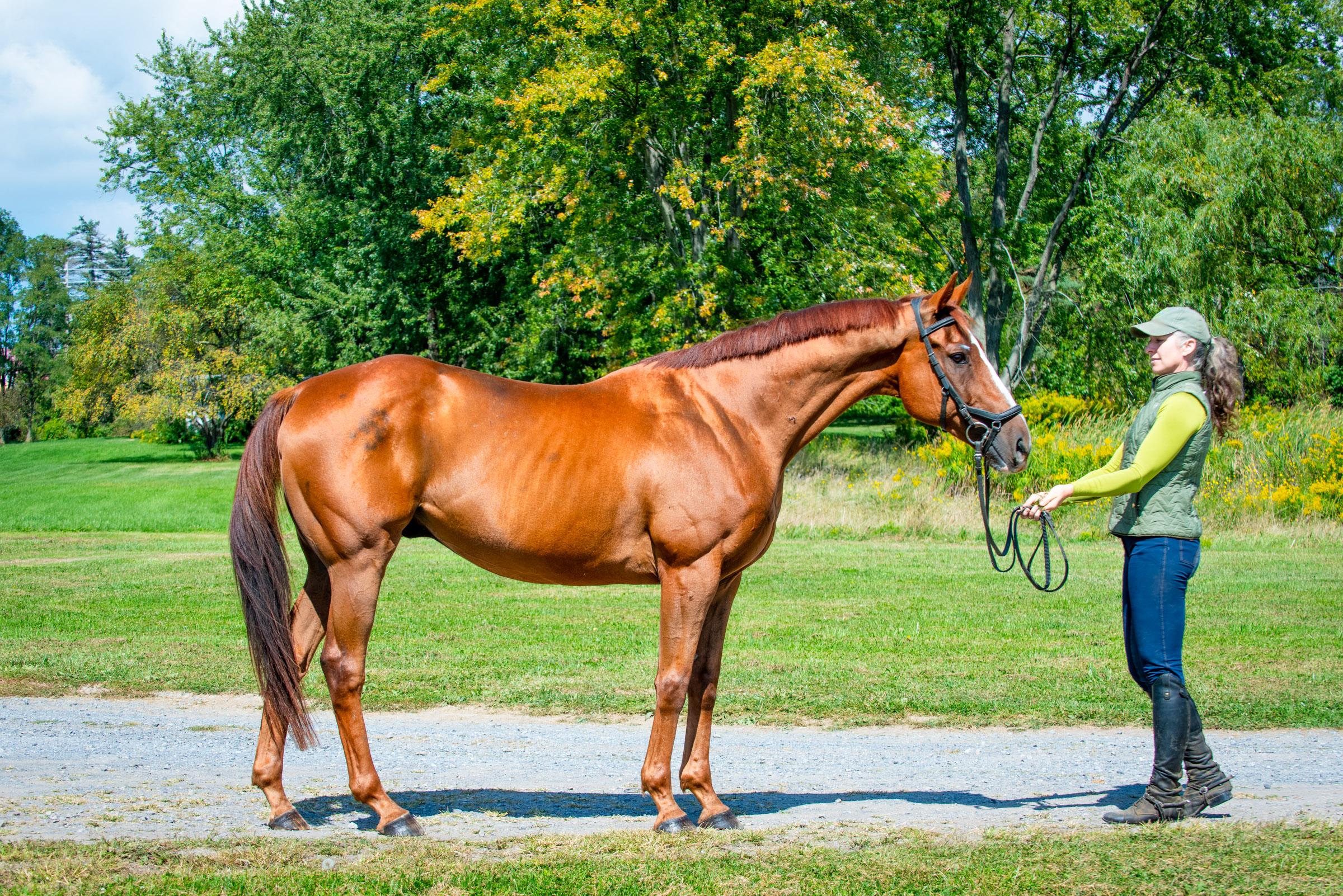
C The King looking a good bit like what his dosage profile would predict. Photo by Lily Drew
Dosage makes it make sense that eventers and fox hunters look excitedly at a horse with Saddler’s Wells or Galileo (Solid type dosage sires) in the pedigree for their stride jump and stamina and the conformation that comes with being a longer distance runner. Similarly, barrel racers or polo folks may favor horses with more Native Dancer breeding (though, to be fair, most horses in the US have some Native Dancer in them…).
Another important point is that I don’t really care about the numbers themselves, but more about the shape of the graph they produce. In my world a 8-2-12-0-0 is pretty similar to a 2-0-4-0-0. The graph would make the same shape, and while I’d imagine that the horse with the smaller numbers would not be closely bred to any of the greats out there (or that they’re found a few generations back in their pedigree), the two horses likely would take on a similar conformation.
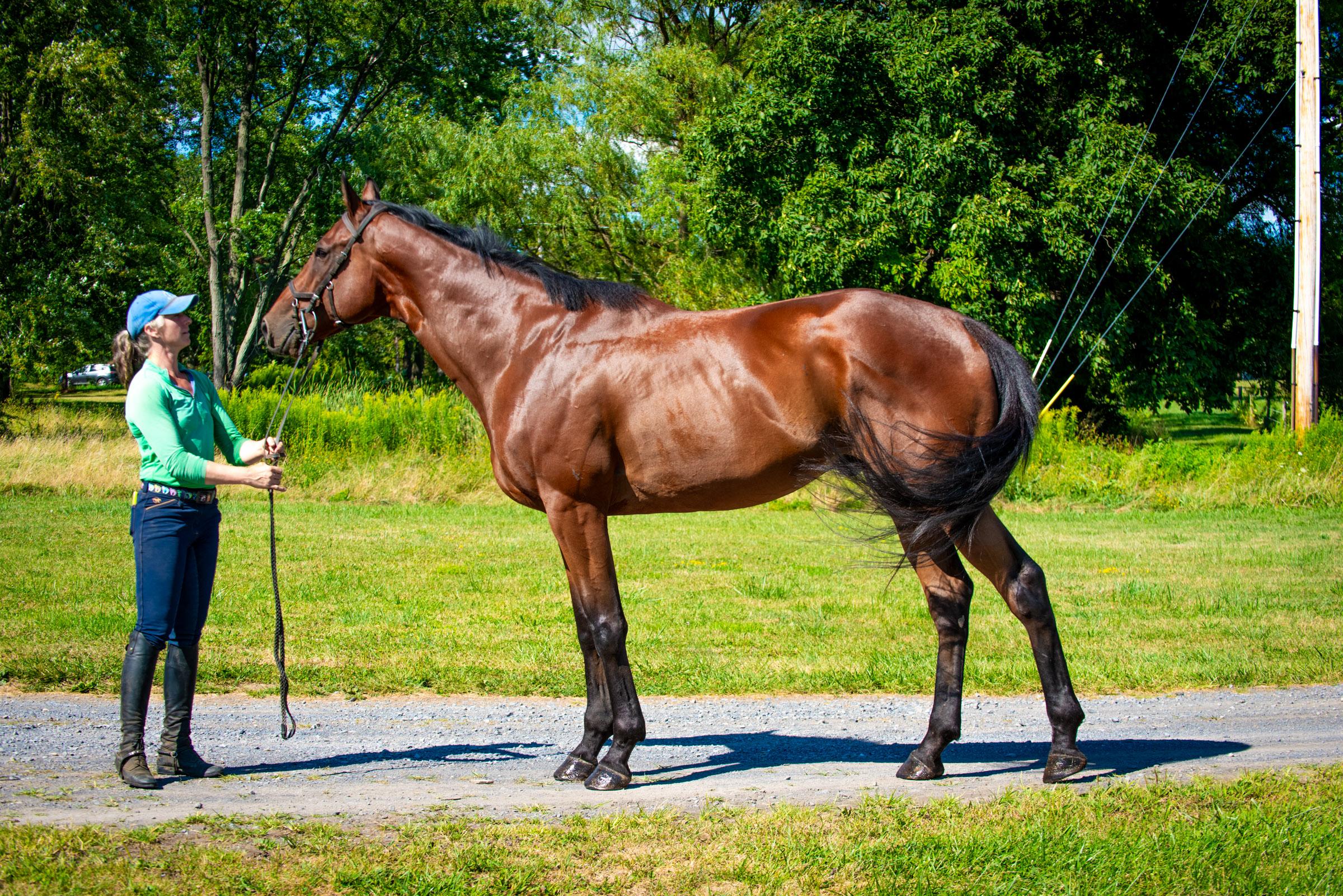
Despite his big bone and height (17.1h) Generation’s dosage shows him to be bred for both the short races and the middle distances, typical of the American Thoroughbred. Dosage 8 1 9 0 0. Photo by Lily Drew.
OK, so before folks go and look at their dosage and yell at me about the fact that their horse is uphill and long backed with a huge stride and their dosage says it should be short coupled and downhill – hang tight. This is all about generalizations and statistics. Of course there are horses that break the norm. There are just more of them that follow it. Look, my best UL event horse prospect is slightly downhill with a dosage of 0-2-2-0-0, and that alone somewhat upends the points I’m making.
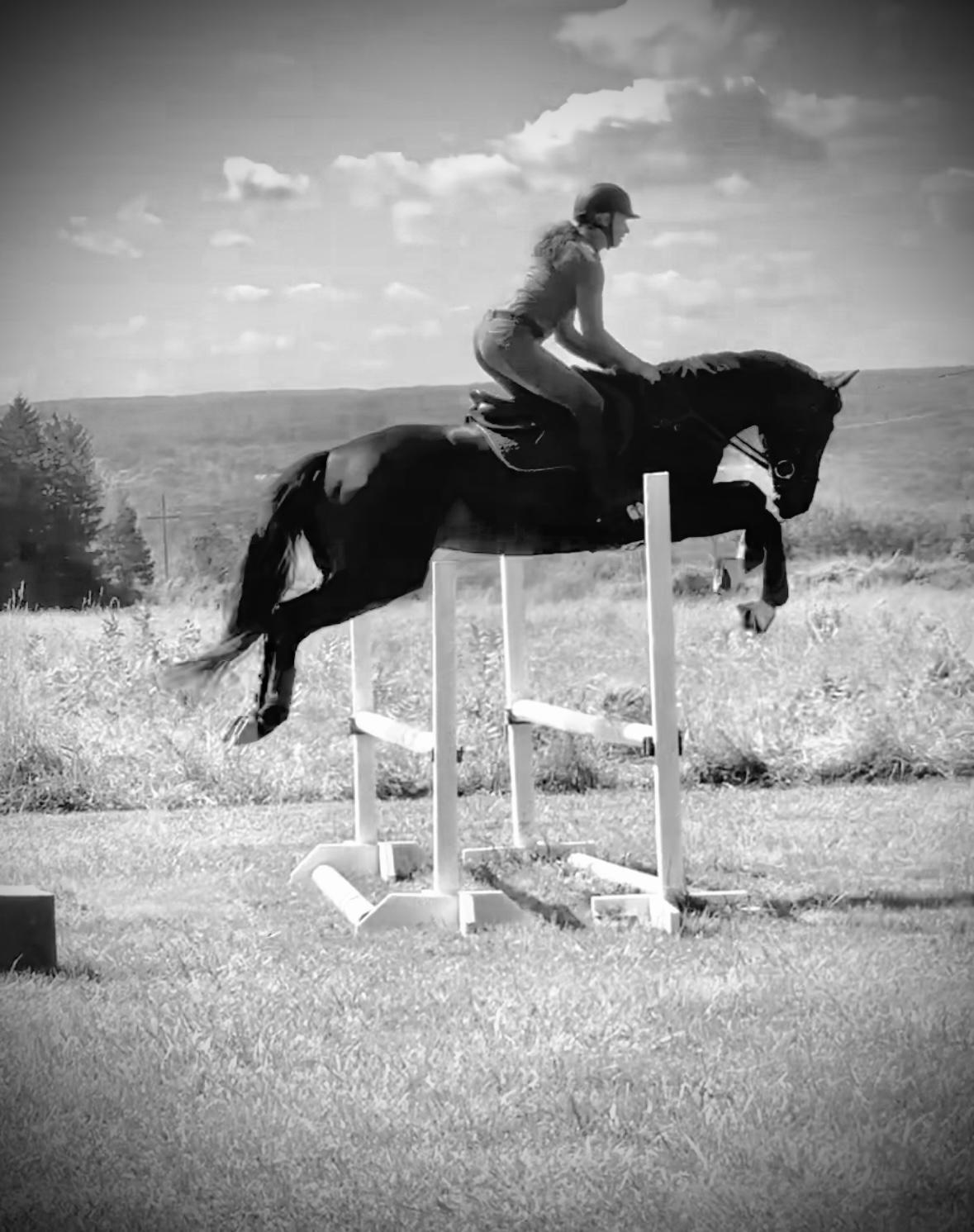
Neil (Lute’s Angel dosage: 0 2 2 0 0) making short work of the oxer in the grid last week. Photo by AP Graham, courtesy of Pivo.
Dosage tells us about the races these horses were bred to run. It sometimes tells us about the conformation needed to run those races well. And it might be able to predict the types of second careers they will succeed at. But what dosage does not measure is heart and drive. Neil’s dosage is so lack luster it is almost funny. But just wait, eventing world — with some luck and continued soundness, that horse is going to be something in a few years.
So, go nerd out and see if this info holds up in your world. Then go ride the horse you have in the sport you love, because that is far more important than the numbers.
Elevate® Maintenance Powder
Fight back against seasonal vitamin E deficiencies.
Elevate® Maintenance Powder was developed to provide a highly bioavailable source of natural vitamin E to horses. Multiple research studies have shown that vitamin E is often deficient in the diets of horses that do not have access to continual grazing on fresh green grass, or those grazing on dormant winter pastures. Performance horses with demanding workloads, growing horses, and seniors have higher requirements for vitamin E, making deficiencies a more common occurrence. Studies reveal that horses who are deficient in vitamin E are at a higher risk for developing neurological and muscle diseases. Don’t let a lack of natural vitamin E put your horse at risk; supplement with Elevate this winter to ensure your horse gets the vitamin E needed to thrive.
The horse that matters to you matters to us. Not sure which horse supplement best meets your horse’s needs? Kentucky Performance Products, LLC is here to help. Contact us at 859-873-2974 or visit our website at KPPusa.com.

