



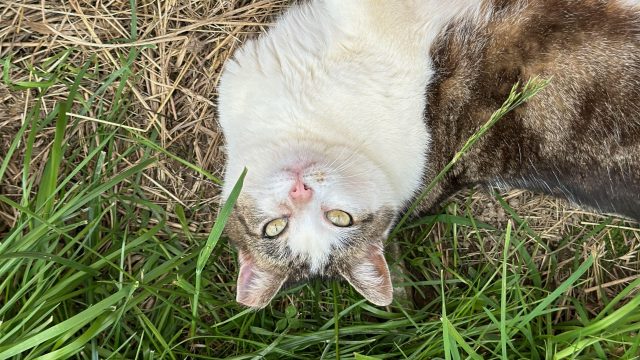
From Hayloft to Hearth: The Evolution of a Barn Cat to a House Cat
Because sometimes, the mouser becomes the monarch.
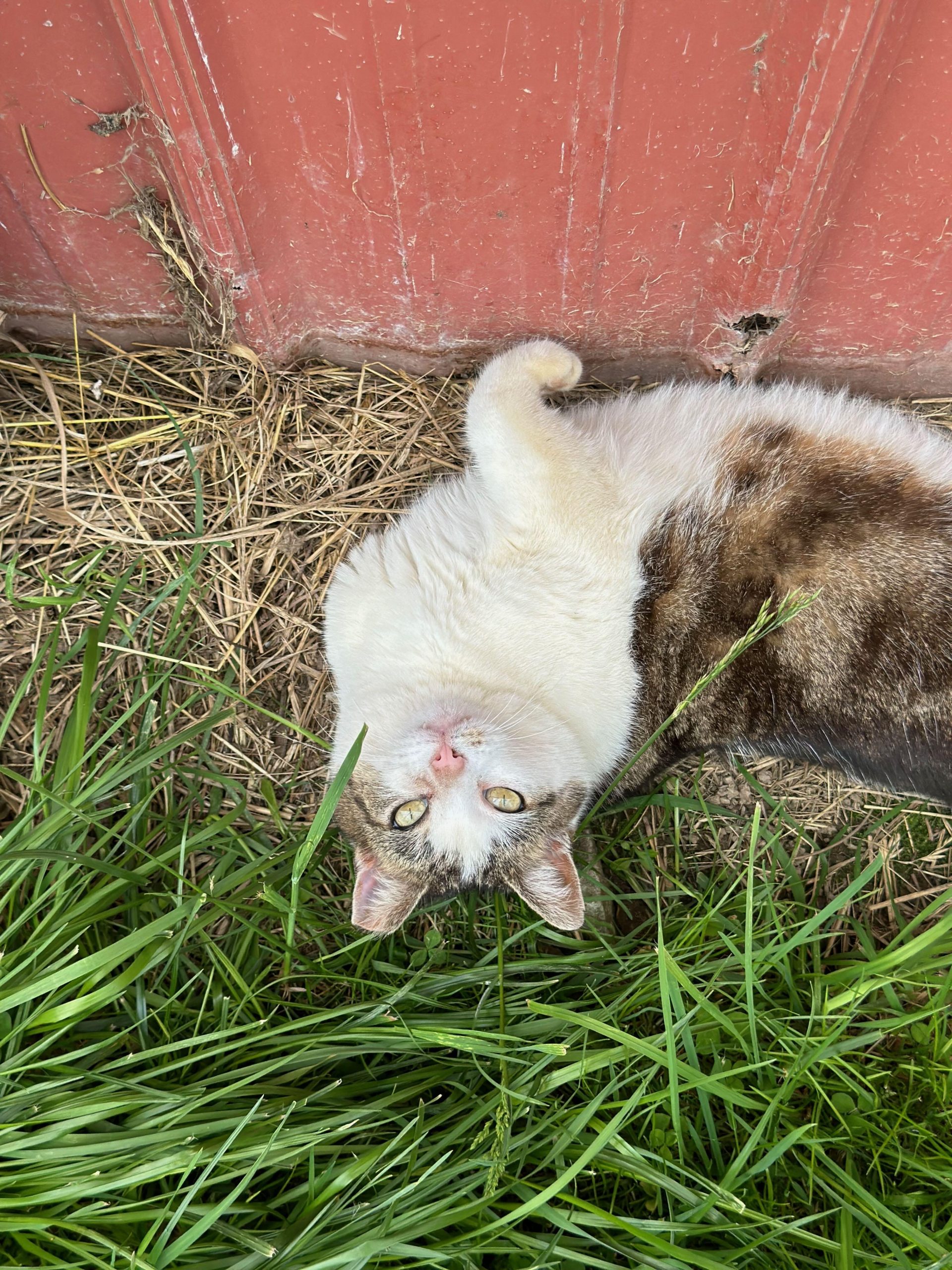
Kimber enjoying the sun at the barn. Photo by DeAnn Long Sloan.
There’s a special kind of magic to a barn cat. They appear when you least expect it — lurking in the hayloft, prowling along fence rails, or silently judging you from a feed bin. Barn cats are stoic, independent, and often just barely tame. They’ve got a job to do (mouse and bird patrol), a place to live (wherever they want), and generally little use for humans… usually.
And then there are my barn cats. Generally considered the friendliest barn cats on the planet. Despite being fine with a mostly feral feline that would work hard to earn her keep, I ended up with two very lovable pets. Ones that come running every time I (or anyone, for that matter) pull into the barn. Ones that jump on my shoulder the minute I sit down. Ones that will even ride in my car as I back down the driveway, just for an extra minute of affection.
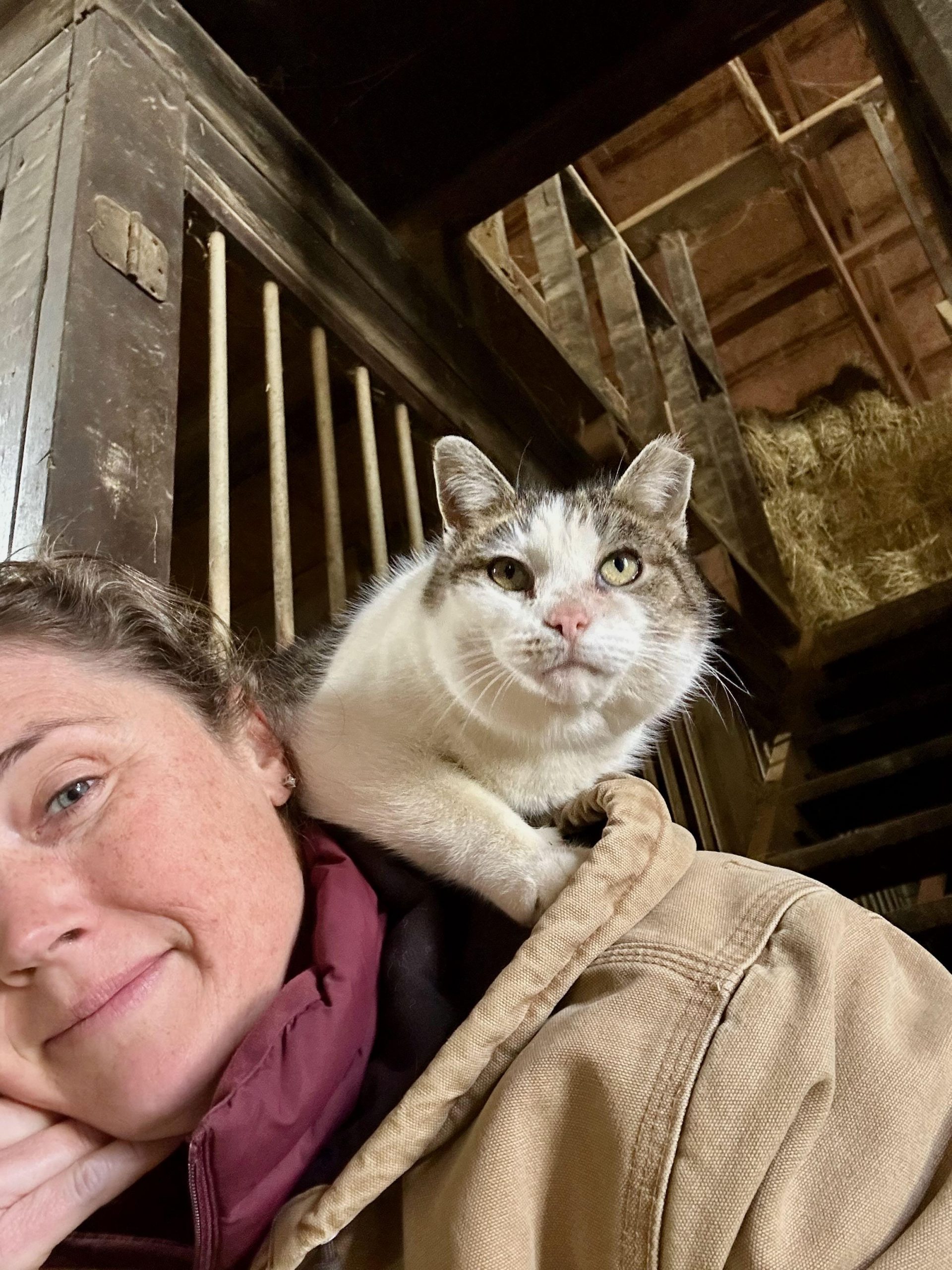
Kimber as a parrot (because I was gullible enough to sit down on the steps going up to the hay loft). Photo by DeAnn Long Sloan.
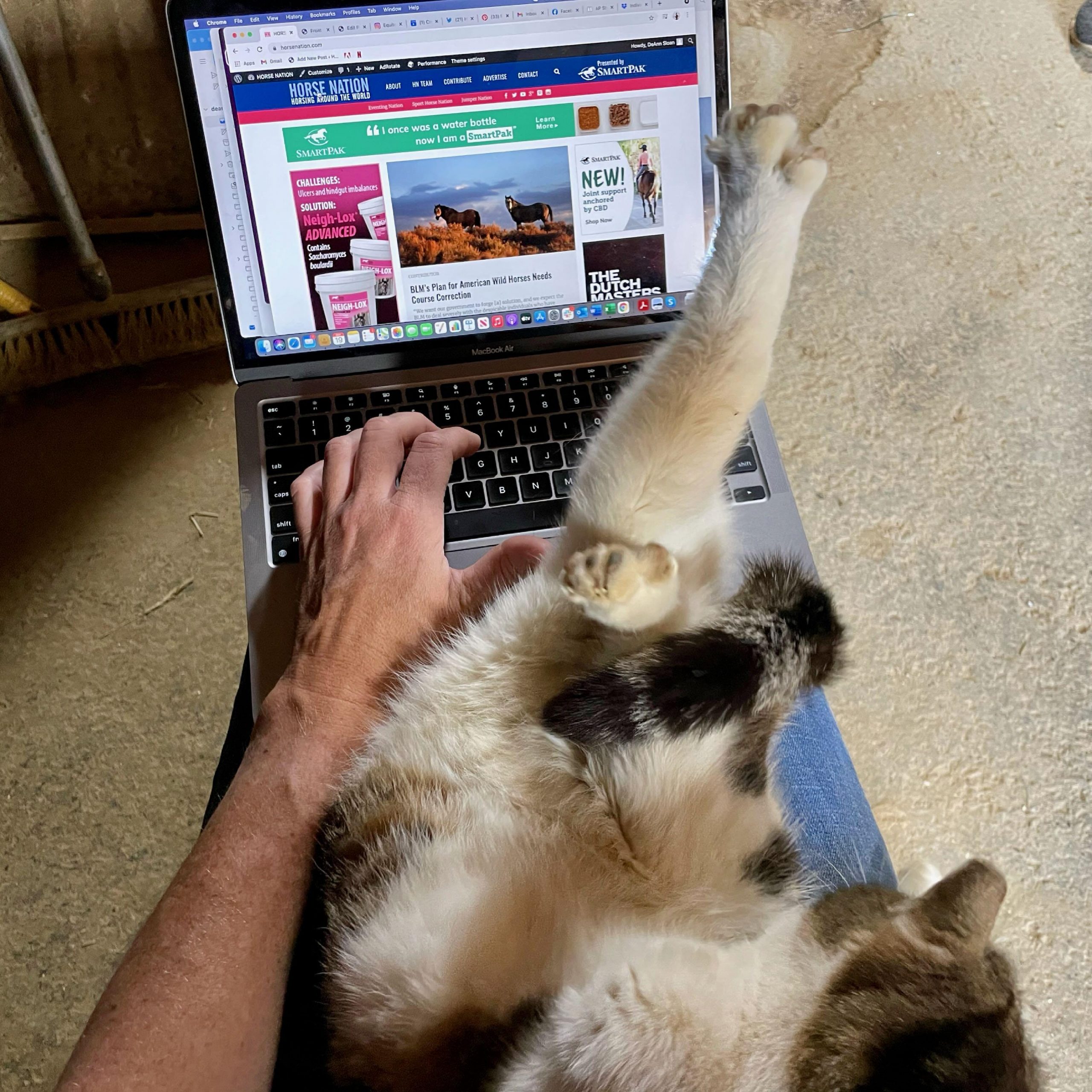
Trying to get some work done at the barn… with Kimber’s assistance, of course. Photo by DeAnn Long Sloan.
The Transition: How It Happens
The barn-to-house pipeline isn’t always intentional (and it certainly wasn’t in this case). Sometimes a cat just starts lingering at the back door. Maybe bad weather drives them closer to the house, or maybe they’ve aged out of the barn life and are looking to retire with benefits: heated floors, daily meals, and uninterrupted naps.
Often, it’s us humans who cave first. One chilly winter night and suddenly you’re rationalizing, “Just for tonight… maybe the garage.” Fast-forward three weeks, and they’re on the back of your couch judging your Netflix choices.
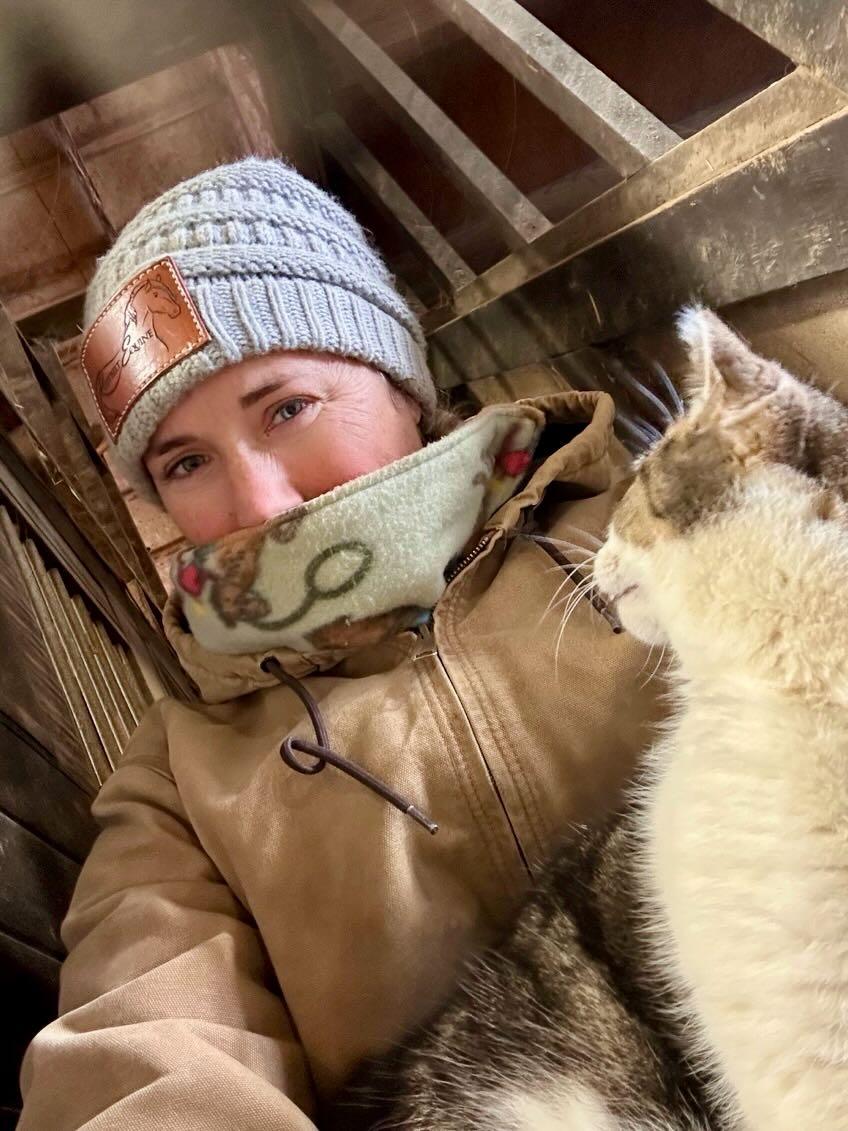
Kimber enjoying some lap time on a cold day at the barn. Photo by DeAnn Long Sloan.
The transition can be gradual, with a lot of back and forth between barn and home. Other times, it’s a dramatic leap — quite literally, through an open window or a door left ajar. Some cats take to indoor life like they’ve always belonged on a throw pillow. Others need a bit of coaxing (and maybe some tuna).
For my barn-cat-turned-house-cat, I like to tell myself it was a dramatic shift — that she left the barn all of a sudden due to health reasons (spiking a fever twice in a short period of time when the weather heated up, making it clear that barn life was no longer for her). But the truth is, For Kimber it was more of a gradual climb, one that culminated in a dramatic telling that her needs had changed.
Barn Cats Are Tough
Make no mistake — barn cats are different than your average house cat. They’re survivors. They’ve battled raccoons, lived through rainstorms, and have likely seen things they’ll never talk about.
Kimber definitely is a survivor. We’ve joked for years that she has every intention of using up all nine of her lives. She came to our barn as a rescue from a feral cat colony — complete with FHV-1. She and her sister we supposed to be feral. In reality, they were some of the friendliest cats I’ve ever met — especially Kimber.
Following Kimber’s rescue, she adapted to barn life relatively easily. She and her sister were young and playful. They hunted and lounged — did the things barn cats were supposed to do. That playful side nearly got the best of Kimber when she went after the end of a lunge whip mid lunge. The end result was getting accidentally trampled by a horse named Kat, resulting in the loss of her front left leg.
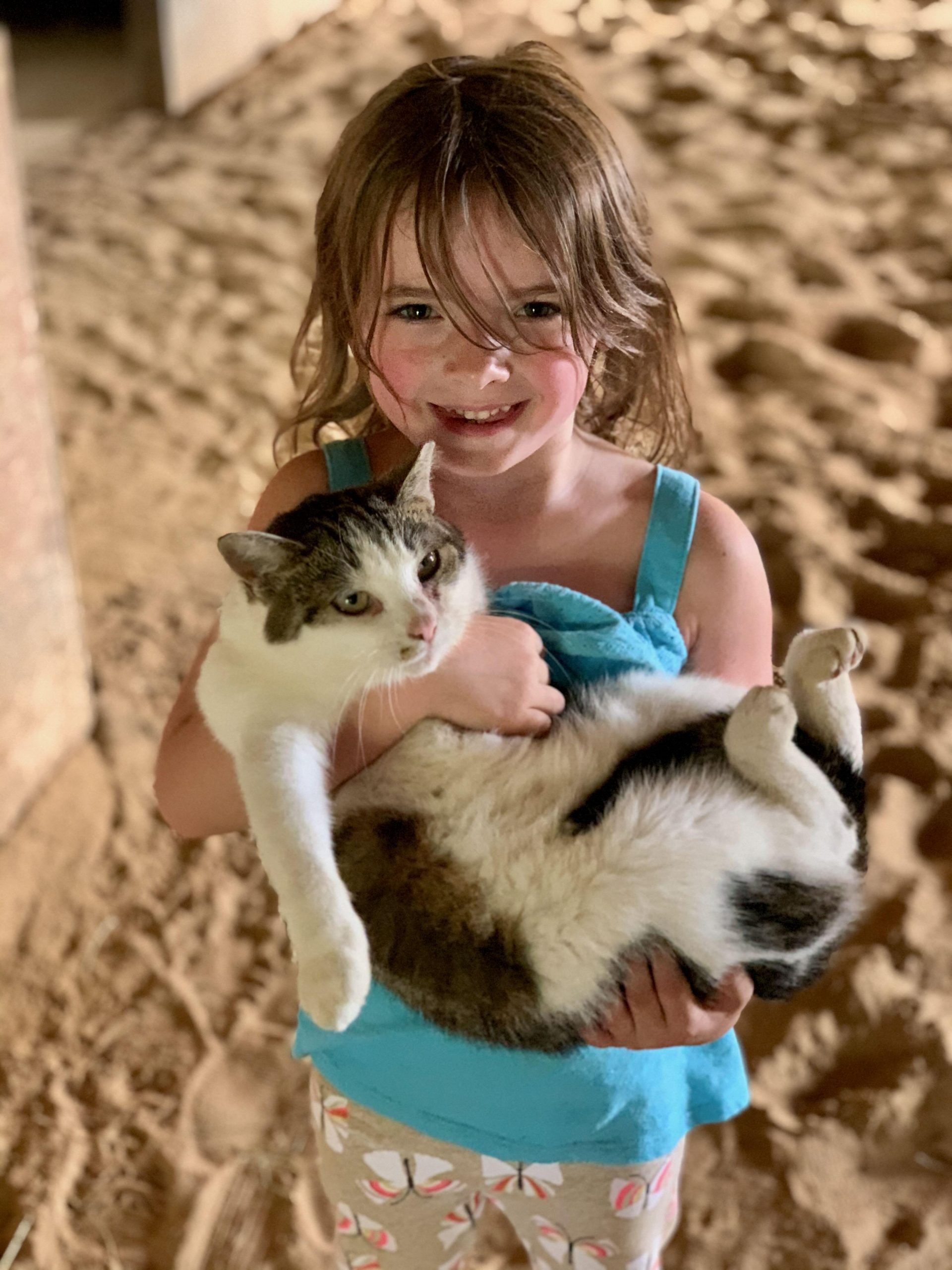
The loss of a leg didn’t seem to bother her. And it certainly didn’t keep her from being her sweet self and putting up with my barn-rat kids. Photo by DeAnn Long Sloan.
Despite the handicap, she continued to rule the barn and hunt. Less of a stalker and more of an opportunist, she brought in small animals here and there, but mostly lounged around and roamed the hay loft. For the most part, the loss of one leg didn’t seem to bother her — until it did. One day she slipped off the loft and fell into the arena.
What appeared to be a fractured pelvis made us think her luck had run out. But another trip to the vet let us know that cats are resilient and, if we were able to limit her movement for six weeks, she likely would be fine. So, pain meds in hand, back to the barn she went for six weeks of stall rest. She came out the other side just fine, if a bit slower (and definitely less motivated to hunt). But she still seemed happy at the barn… until she wasn’t (see aforementioned fever spike).
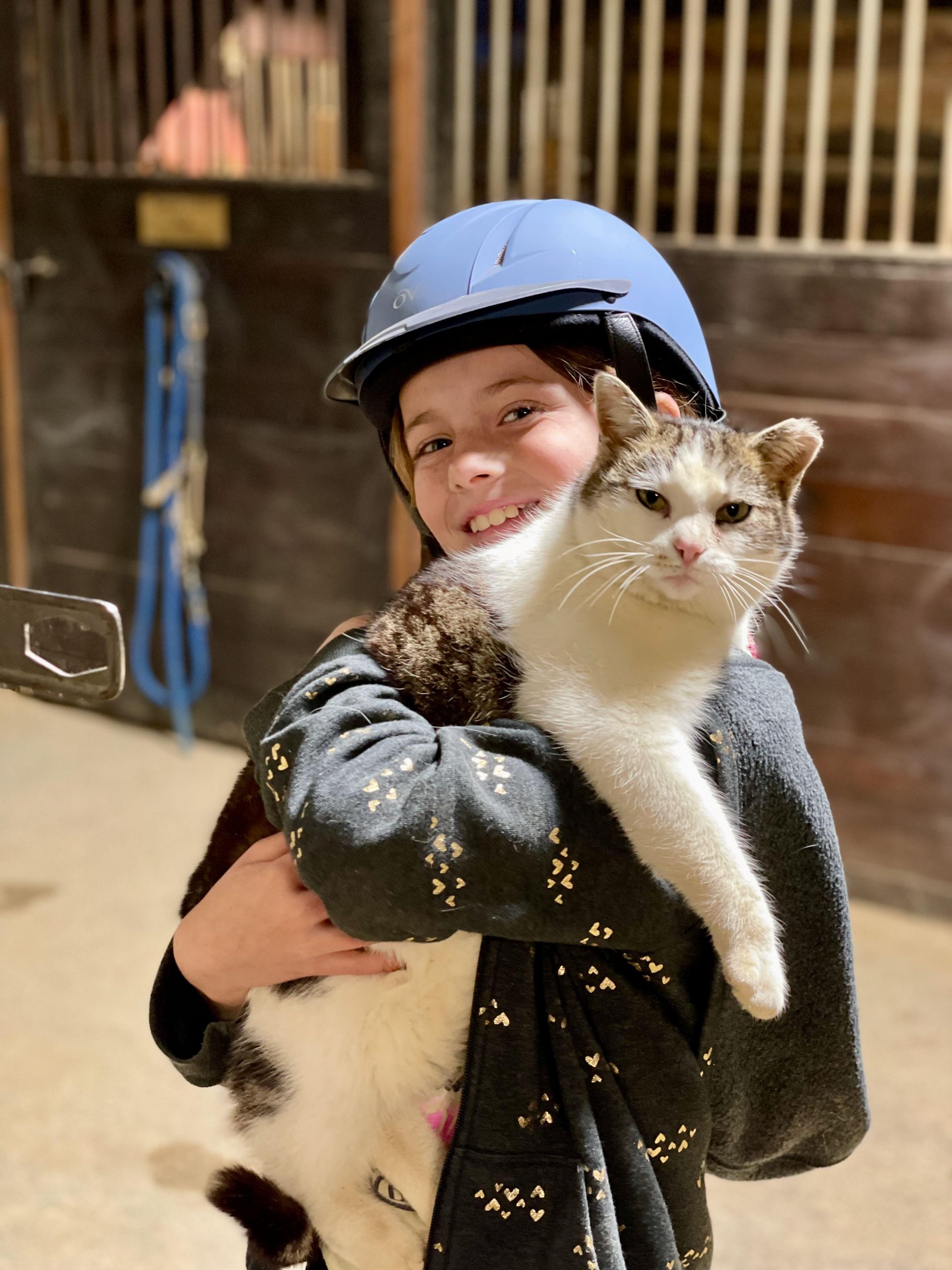
Kimber at the barn, being enjoyed by another Sloan kid. Photo by DeAnn Long Sloan.
So home Kimber came. First she was with one of my boarders, who works in small animal vet med. I was heading out of town when Kimber’s most recent health issues arose, so my boarder was kind enough to take care of her, give her meds and fluids, and generally spoil her.
Sometimes when barn cats come inside, they carry a bit of their streetwise attitude with them. They might be wary of enclosed spaces, startled by household noises (dishwasher? betrayal), and completely baffled by the concept of a litter box.
Not Kimber. She let us know this was where she belonged all along — a snugglebug who want nothing more than to purr on your chest at 2 a.m. — and canned food twice a day.
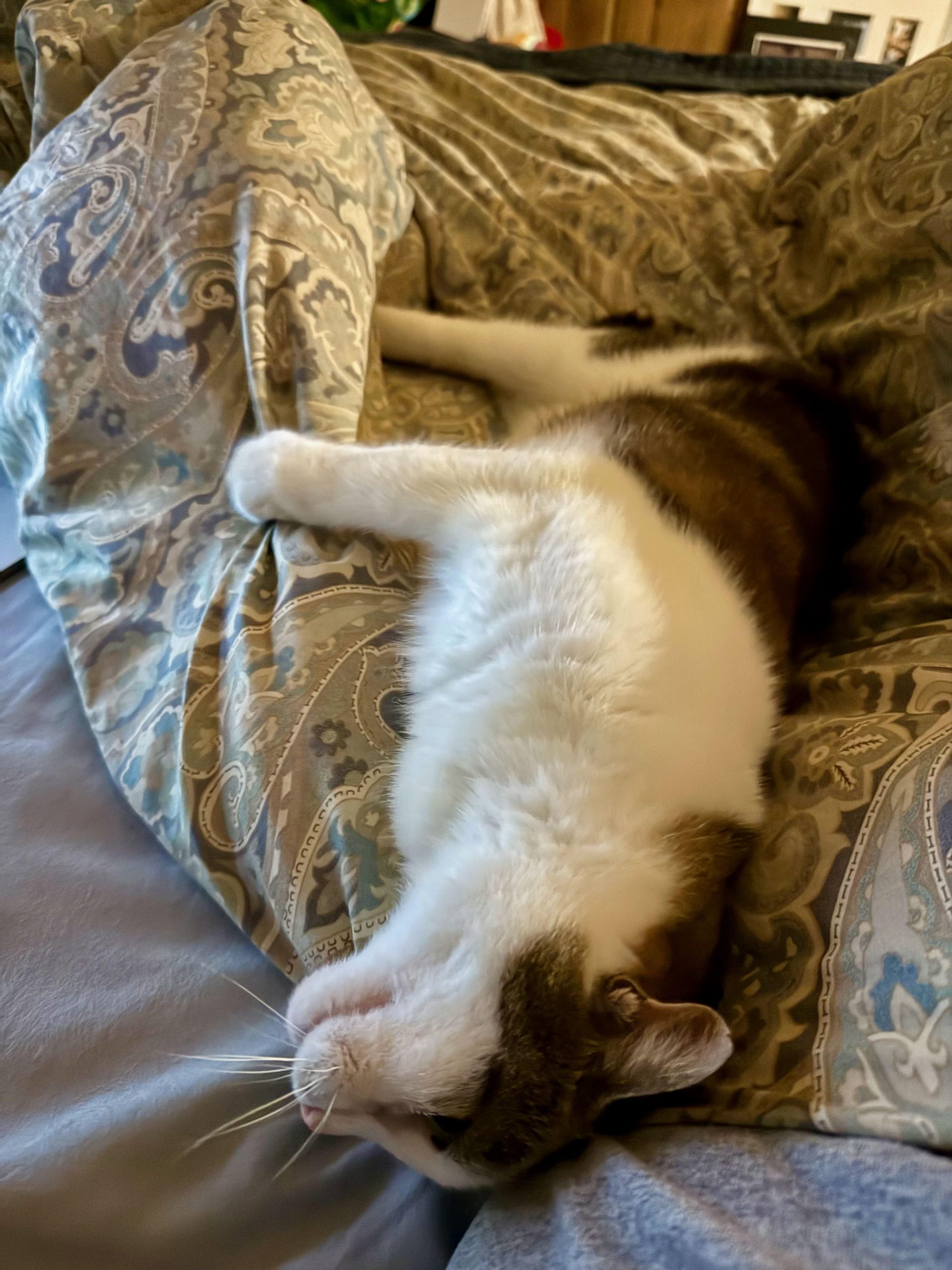
Kimber’s first night at home — in my bed, of course. Photo by DeAnn Long Sloan.
Someone tell her she’s the luckiest cat on the planet.
Not All Cats Want to Retire Indoors
Of course, not every barn cat dreams of luxury living. Some are fiercely territorial and will resist indoor life with all the strength their tiny paws can muster. And that’s okay. For these cats, the barn is home. The freedom, the space, the fresh air — it’s where they thrive. The best we can do is offer warmth, food, and the occasional chin scratch if they’re feeling generous.
But for the ones who do make the leap to indoor living, it’s can be a beautiful thing. You get a low-maintenance roommate who asks for very little (besides food, warmth, and world domination) and offers companionship with a touch of street cred. Kimber promises to be just that (although with maybe a little less street cred, since all she really wants is to curl up on someone’s lap).
Now she just needs to figure out how not to hiss at the cat that’s only known the house (pictured below — and, yes, she’s had her FHV-1 vaccination), and the dogs. But that one might take sometime.
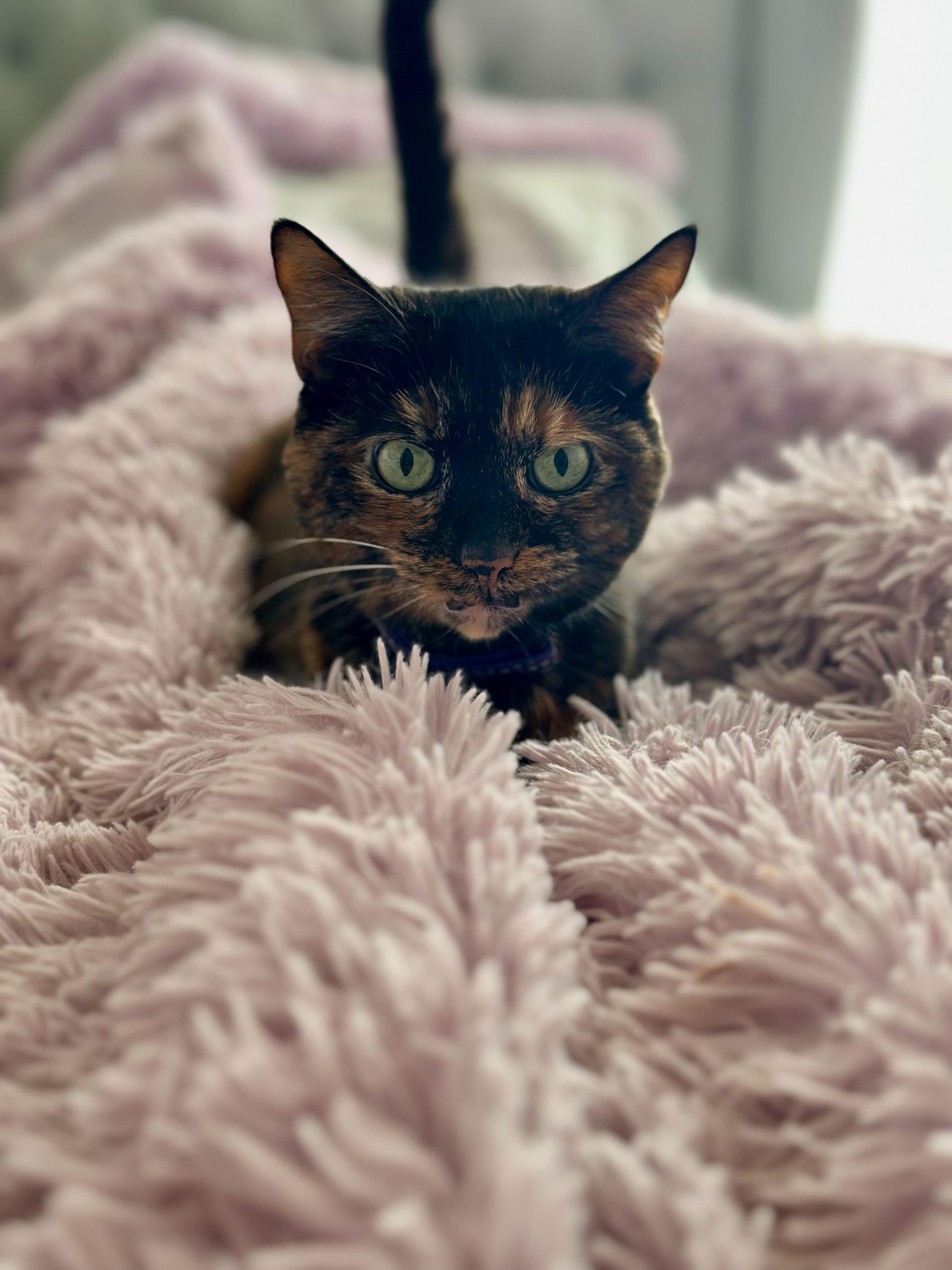
Moana, aka Kitty, the toothless wonder cat, who is less than impressed by her new roommate (for now). Photo by DeAnn Long Sloan.
So next time your barn cat lingers a little longer at the back door, don’t totally blow them off — give them a second look. They might just be ready to trade hay bales for heated blankets. Just be sure to stock up on treats… and never assume you’ll get the couch back.
