



Training in the Right Way: The Good Side vs the Bad Side
Here’s a hint: There isn’t one. At least not in the way you think.
Dressage training is supposed to be the process of training ANY horse to be a better riding horse. The more the horse learns, in theory, the easier it is to communicate with and therefore complete more complex tasks with. Although competition dressage training often is more focused on training for the dressage test, that is not what the original intention (and original judging requirements) were for competitive dressage. Initially, it was designed to give riders and trainers a way to determine how their training measured up to the theoretical ideal of the training process. That said, it is critically important to understand the meanings and reasons for some of the terms we use to describe dressage training and what to look for when observing training and competition (and videos and photos), regardless of whether you intend to compete or just train your horse to be a better whatever you do with him. That, ultimately, is the main purpose of my articles. To provide education and knowledge for riders to understand and improve their eye and understanding of what dressage training is supposed to be. While there will always be some differences in practice and theory, good horse training is always recognizable to the educated eye. That said, it absolutely is necessary that we remember and understand that limited knowledge is limited judgment.
* * *
One of the things I hear regularly when I’m teaching is which direction is the horse’s “good” side (or direction), and which is its “bad” side. Guess what guys…
There is no “bad” side OR “good side,” for that matter. And yes, I recognize this might seem like a semantics argument, but it’s more accurate to refer to them as left and right or maybe “hollow” and “long,” if you want to be accurate AND specific.
Yeah, I know. It’s easier to get the horse to bend toward the “good” side, but the irony here – and perhaps the entire point of this week’s article – is that that doesn’t actually mean that’s a better response. Quite often, when your horse would prefer to fold up like a wet napkin in one direction, he is not doing so because he is better trained, more obedient, or “listening” better that way. It simply means that he is inclined to position his body with that side curved and the other side elongated. It’s not the same as how humans are left-handed or right-handed, but it does have some similarities. Most humans are not truly ambidextrous and cannot easily do everything equally well with both hands/sides of their body. But we do not consider one side of our body as good and the other bad based on this limitation. Also, with some practice, we can learn how to perform some activities equally well with both hands, even if we are not truly ambidextrous.
So, why am I hung up on people incorrectly labeling their horses this way? Aside from the fact that it is inaccurate, mostly because that sort of thinking predisposes the rider to approach the training from a more negative space (i.e. his ‘bad’ way) and it shows a lack of understanding about the training process itself.
As an appropriate starting point for this discussion, I want to take a moment to remind everyone of how to think about suppleness. Definitions of suppleness include freedom of movement (looseness in the way the horse moves his body) but also, with regards to training, it is the ability to perform equally well in both directions. It is important to understand that suppleness is not evaluated by how extremely the horse can bend his neck in both directions when the rider pulls on one rein or the other. As every horse has innate differences each direction, part of the training process is to help them develop their ability to perform equally well in both directions (suppleness). Obviously then, it makes sense that noticing the differences is useful in guiding your training process, but labeling them negatively (i.e. bad) is not a helpful part of the process.
(Additionally, this is a good time to stop and clarify that a veterinarian or body worker might evaluate a horse’s ability to bend his neck both ways as part of an exam, and the inability to bend equally both ways in that exam is indicative of a problem, and this can absolutely translate to problems under saddle. This article is focusing on the training aspects of bend, not the diagnostic aspects. Additionally, this is a very good time to point out that the horse still does not have a “good” side and a “bad” side under these circumstances, either).
An equally important piece of information to keep in mind when evaluating your horse’s ability to bend both ways is to know how much bend is required of a horse in dressage training and competition. The answer is enough. You only need the amount of bend required for the exercise you are performing. A Training Level horse will never need the amount of bend required for the Grand Prix trot half-pass. He only needs to bend enough to make a 20m circle. And, in no dressage test ever is a horse required to bend his neck in both directions to the point of looking at his rider’s knee. Please re-read that sentence.
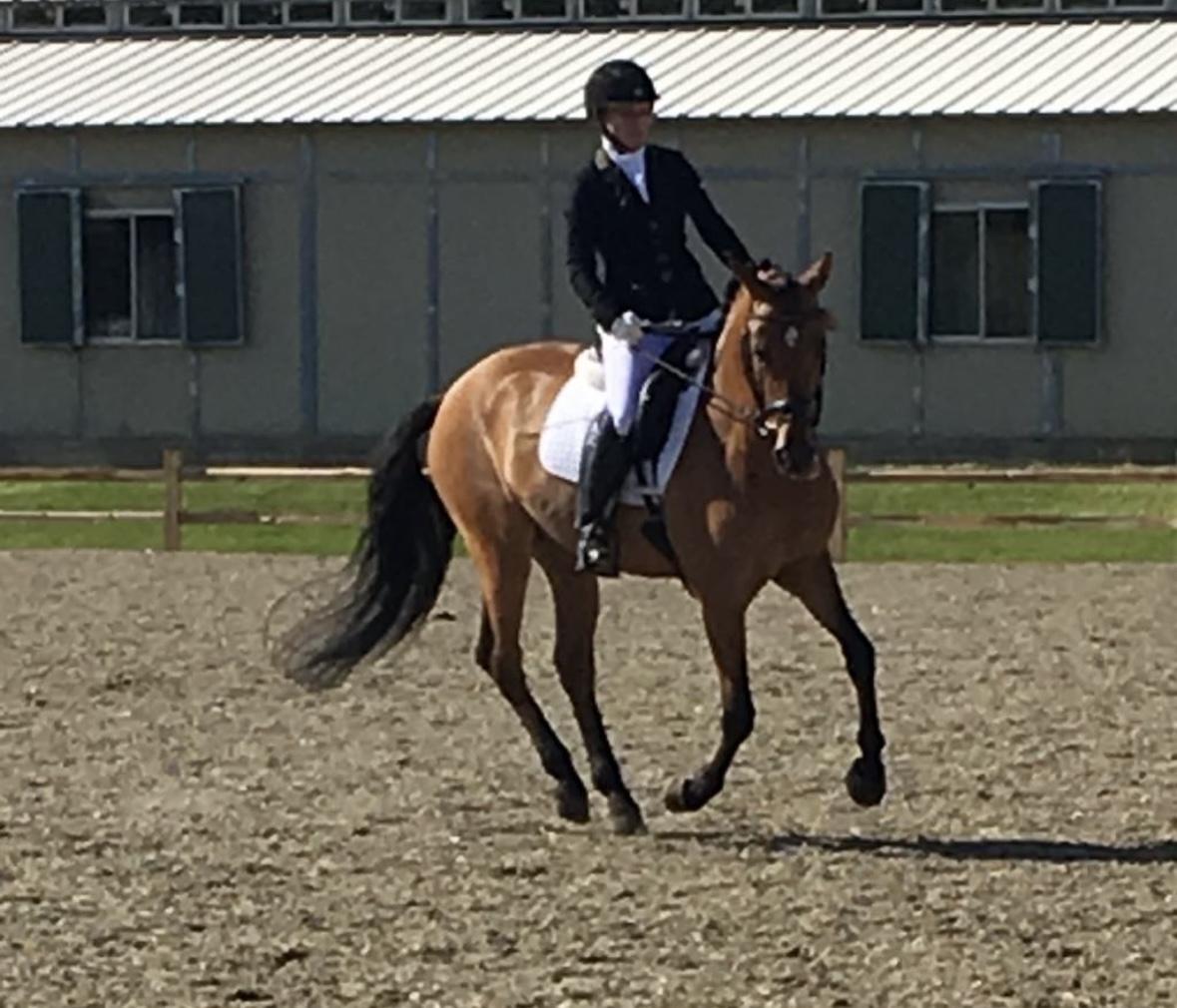
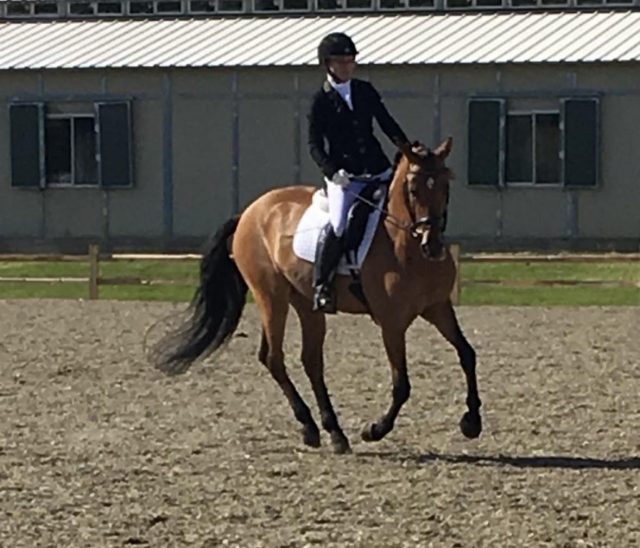
The lower level horse does not need to produce a lot of bend, especially in the neck. A Training Level horse only needs to have enough bend to create a 20m circle. Photos (c) Gwyneth McPherson
Your Training Level horse needs to be able to bend only to the degree of making his body (yes, his body, not just his neck) bend on a 20m circle. He needs to perform this exercise equally well in both directions. Now, if we have a horse that is overly willing to bend right and normally willing to bend left, our job is to make him bend normally in both directions. In other words, the ability to over bend one way is not actually better.
When we look at riding both sides of the horse as different but equal, we no longer over or under ride one side. Many riders will spend way too much time focusing on bending the horse more, or longer on his “bad” side. Other riders often avoid working the bad side because its too hard. There are many exercises and techniques that can help address making the horse more alike in both directions. However, for the purpose of this discussion, I want you to come away with the understanding that just because the horse bends super easily one way, and not so great the other, does not mean he is more compliant or better trained in the super-bendy direction.
The last bit of information that is critical to understanding this concept of not having a good side and a bad side is this: The horse is usually NOT better balanced or more capable when traveling in the direction he prefers to bend toward more. Much of the time (not 100% always), this is the weaker, less-balanced direction. So, most riders will refer to the better balanced, stronger direction as the bad side because they misunderstand what actual functional suppleness looks and feels like, and therefore they perpetuate the unevenness in their training.
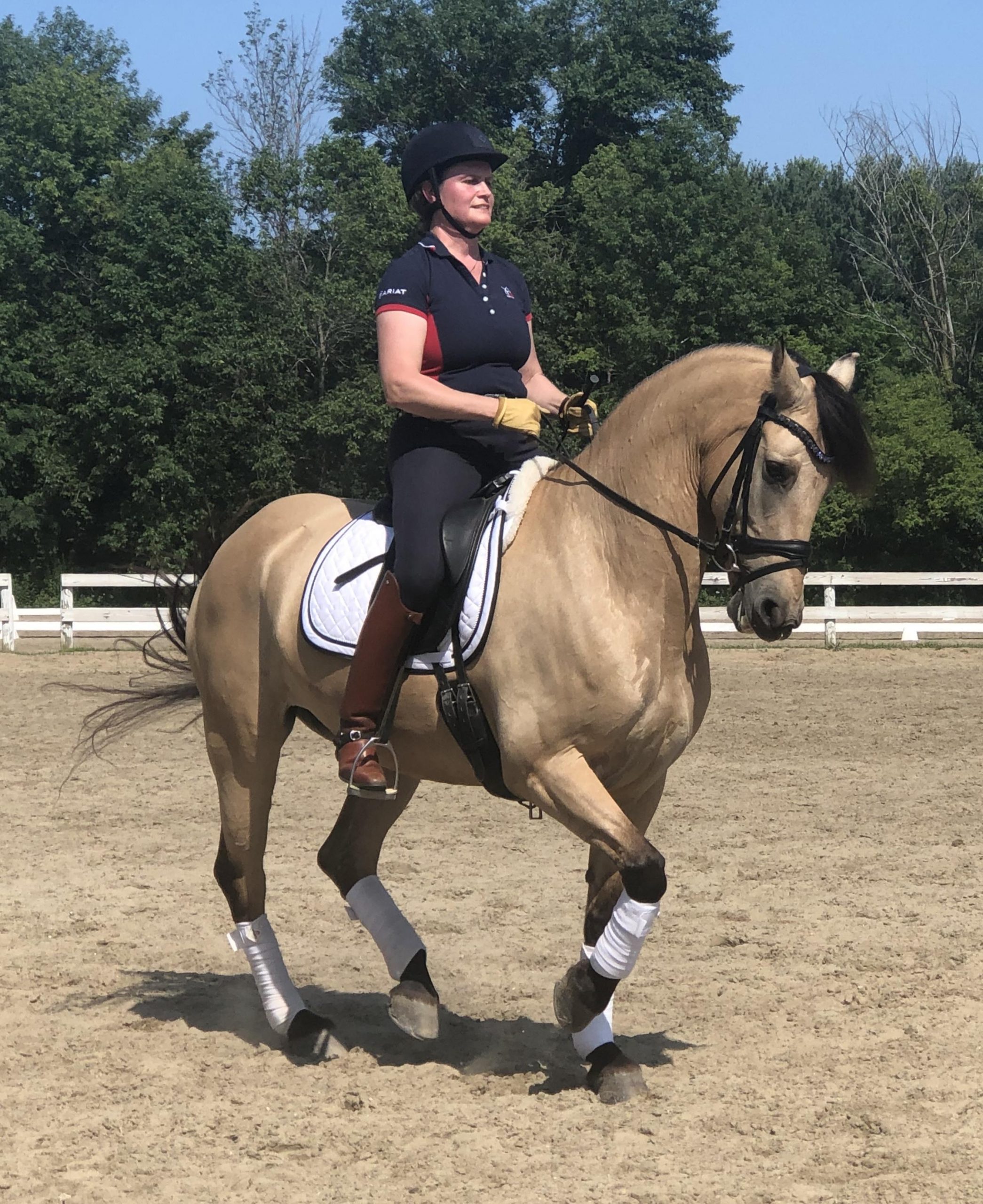
Focusing on riding the whole horse, and not just one side or the other is the key to success. Photo (c) Gwyneth McPherson
Ultimately, when schooling your horse and in thinking about suppleness, avoid using the ideology of the horse having a good side and a bad side. Focus on the things that the horse does well in both directions and modify the things he does not do as well equally both ways. When you focus on these things, make certain you are riding the whole horse, not just one side at a time and make yourself aware of the difference between compliance with bending the neck when you take back on one rein or the other, versus the horse performing the exercises in his training equally well (because they aren’t entirely the same thing).
Approaching all training without emotionally charged language — and with an understanding of what the end result is actually supposed to be — is the path to success. Focusing the bad stuff almost always puts the rider in a negative spiral of avoidance, or over-focusing on a single training challenge.
Remember: limited knowledge is limited judgment.

Gwyneth and Flair in competition at Grand Prix. (c) flatlandsfoto.
Gwyneth McPherson has over 35 years experience competing, training, and teaching dressage. She began her education in in the late 1970s, riding in her backyard on an 11 hh pony. Her first instructor introduced her to Lendon Gray (1980 and 1988 Olympian). who mentored Gwyneth for a decade during which she achieved her first National Championship in 1984, and her Team and Individual Young Rider Gold Medals in1987.
In 1990 Gwyneth began training with Carol Lavell (1992 Olympian) who further developed Gwyneth as an FEI rider and competitor. Gwyneth achieved a Team Bronze in 1991 and a Team Silver in 1992 in the North American Young Riders Championships, and trained her stallion G’Dur to do all the Grand Prix movements while riding with Carol.
In 2008, while Head Trainer at Pineland Farms, Gwyneth began training with Michael Poulin (Olympian 1992). Michael was trained by Franz Rochowansky (Chief Rider for the Spanish Riding School 1937-1955). Michael has shared much of Rochowansky’s knowledge and wisdom with Gwyneth, completing her education as a Grand Prix rider, trainer, and competitor.
Gwyneth’s teaching and training business, Forward Thinking Dressage,is based in Williston, FL. In addition to teaching riders and training, Gwyneth also loves sharing her knowledge of the sport and art of dressage as well as discussing relevant topics pertaining to the training itself and the current competitive landscape.

